It’s now late March, the Girls Basketball tournament just finished in Minneapolis while a major snowstorm has begun crawling across southern Minnesota where I grew up. These blizzards often come in just after a prolonged thaw, when most of the snow is gone. The storms often begin warm and wet, with lightning and thunder before they dump heavy snow with lightning. Snow comes down on a driving wind that piles up drifts four-five-six feet high. March snowstorms aren’t rare—they’re normal—yet there is something especially wonderful about them. They’re massive and unpredictable.
During my childhood, the weather reports were general—at best. An accurate forecast in the 1950s came out in phrases like: “Scattered showers are possible across southern Minnesota,” or “There’s a chance of snow tonight with strong northwest winds.” That was about as close as a forecast came to what actually happened. Weather satellites, Doppler radar, and climate models added more detail but uncertainty remains.
Farmers I knew didn’t rely on the Farmer’s Almanac—only town people mentioned it. When it came to the weather, everyone was his own forecaster, and pretty much took his bearings from things we all understood—the temperature, the smell of the wind (did it smell damp), the kinds of clouds, the wind direction, whether the velocity was rising or dying, and whether the clouds moved with, against, or across the wind.
For a ten-year-old like me, the weather was a great mystery, a powerful force living just over the horizon. In the spring of my tenth year, we had a string of blizzards that began in February and ended near the end of March. Snow blocked our county road and driveway for several days each week before the county plow got through.
By the time the road opened, the forecasters were hinting at more snow in a few days. We hurried to town in the pick-up to buy groceries and anything else we needed—just in case. The next morning, I waited at the top of our driveway for the school bus. The temperature hovered at freezing and the damp air and south wind foretold approaching weather. School let out right after lunch the next day as heavy snow fell. Our bus slipped and skidded slowly along the roads, dropping off students who almost immediately vanished from sight in the swirling flakes.
All night, the wind howled in the treetops, the thermometer held steady at 32° F, and wind-driven snowflakes hissed against the window panes. I woke up in the morning confident ‘they’ wouldn’t cancel school. Mom turned on the radio at breakfast. In those days, we listened to WCCO, the CBS A.M. radio out of Minneapolis-St. Paul. Over Rice Krispies and toast, I listened eagerly to hear the announcer mention ‘Janesville’ on the list of closed schools. Another day to read pulp western novels.
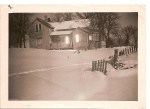
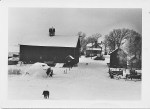
Weekly blizzards continued until late March and each one kept us snowed in for several days at a time. I missed about half of the school days that month, not that I cared. Drifts piled up, and one across our driveway stood at least six feet high. By mid-March, the snow was too deep for Dad to clear the driveway with the Ford tractor and scoop. He called a man with a bulldozer and the ‘Cat’ worked hard to push back the dense drifts—until the next blizzard closed the road and driveway five days later.
Like Paul Bunyan, these spring blizzards have gained legendary status among Minnesotans. They roar in from the Great Plains about the time high school teams assemble in Minneapolis-St. Paul for the state basketball tournament. Sometimes the teams had to stay a day or two extra before the roads opened. It didn’t take long for Minnesotans to connect basketball tournaments and spring blizzards.
While snow falls in Minnesota, I write this from southern Mexico, and feel the excitement of my ten-year-old self once more. For a day, at least, I wish myself back at the farm, feeling secure inside the old house, and watching the thick veil of blowing snow obscure my view of the woods along the river. In a day or two, the sun will eat up the drifts, and then spring will come, and March madness will end.
Some people know the price of everything and the value of nothing. We’ve all met them—crabbed creatures with small hearts whose concept of reality is limited to accounts expressed as debits and margins of profit. Lamentably, we are all infected to a degree and fail to distinguish value from price.
Here, in Oaxaca, artisan goods are plentiful and, except for high end shops in the city center, they lack price tags. A buyer must ask how much, “¿Cuanto cuesto?” Asking is a good thing for a curious buyer because it may lead to a conversation, possibly an education, if not a form of fleeting friendship.
“Pasale,” the weaver says, inviting me to enter his tienda or shop to look at his rugs or tapetes. Most artisans sell directly from their tallers or workshops with a stall at the weekly tianguis or market, and occasionally at the periodic ferias or fairs held at public celebrations, such as during Holy Week.
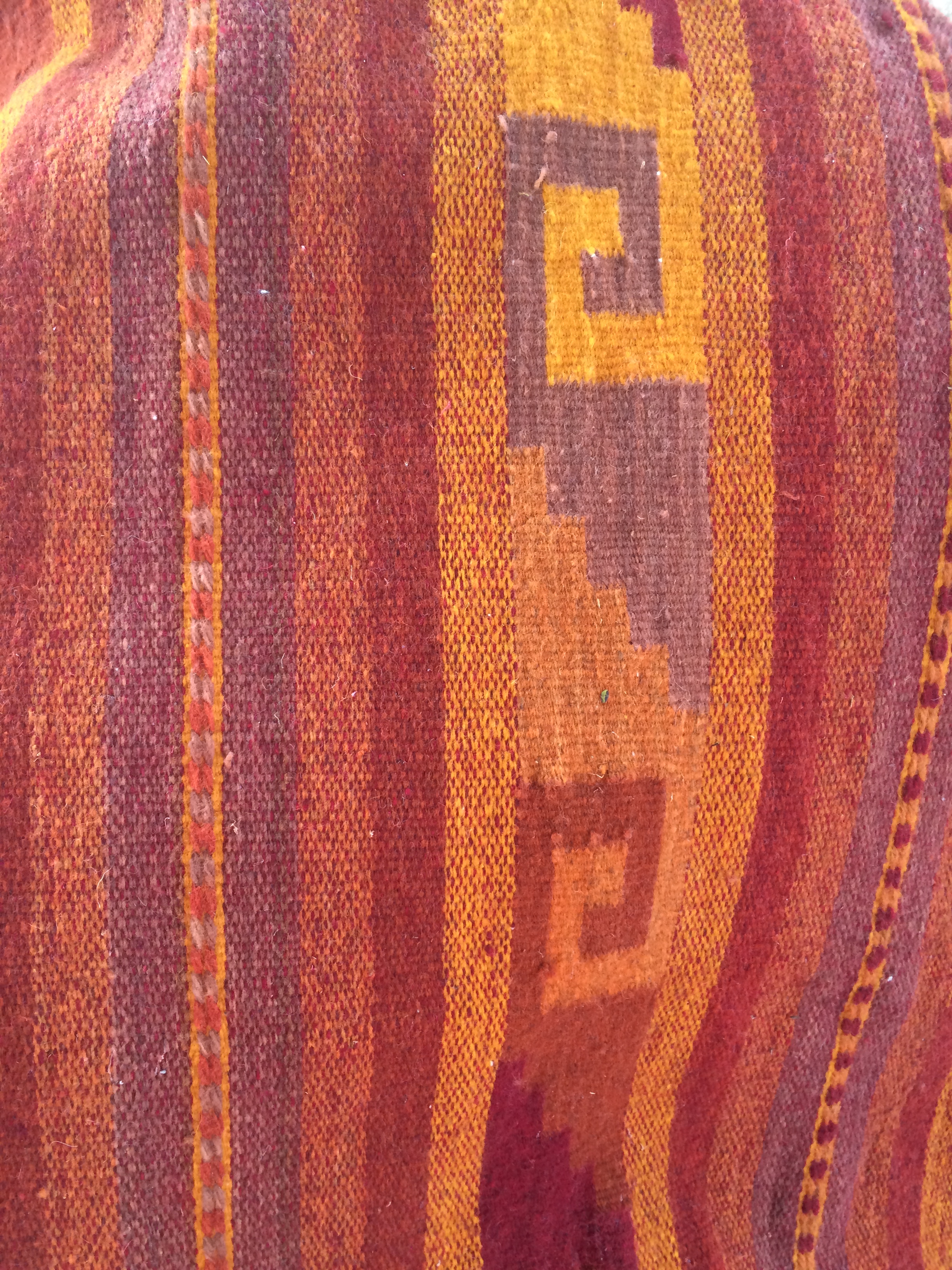
Zapotec rug motif
He is an engaging man in his forties with an open expression and easy way of speaking. Although I’m not in the market for a tapete, I pause and admire his work out of respect for his craft. This tienda is ablaze with rugs in brilliant colors—crimson, cinnamon, chocolate, gold, black, blue—woven into the Zapotec motifs of the indigenous people resident for millennia in this part of Mexico.
“Me encanta los colores, modelos ydiseños. Muy hermosos.” I tell him I love the beautiful colors and designs of his work. He smiles. I’m not in the market to buy one, I tell him, because I already have many in my house. But I admire your work. There are no other customers at the moment and he is happy to talk.
“Esta es nuestra herencia, de generación a generación.” He tells me weaving is his family’s heritage. He learned from his parents and grandparents and now teaches his children to weave. Like most weaving families, they memorize their designs and motifs; there are no patterns in books. This is innate knowledge they pass on to succeeding generations much like families pass down to daughters and new brides the treasured recipes of the grandmothers. Recipes explain how to make a cake, but a family recipe is about a cake that transmits traditions as part of the family identity. And so it is with weaving. It’s more than a skill, it’s an identity.
Weaver’s yarn-natural dye
As a family, he and the children card, spin and dye the wool, and then work the telar or loom to produce tapetes, table runners, bedcovers, shoulder bags, and coasters. Weaving has a small margin of profit, he says, and the tourist market is always uncertain. Sometimes he sells only one or two tapetes a month, at other times more.
Why do this if the margin is so small, I ask.
“Me encanta telar.” I love to weave, he says with a smile that comes from deep satisfaction. Despite narrow, uncertain profits, and hard, meticulous work, it is a labor of love, an essential part of his identity as a man, a resident of Teotitlán, and as a Zapotec with a language and culture extending back several thousand years. Even through the veil of Spanish, his and my second language, I hear his pride, authenticity, and love of creative work. In these intangibles of heart and soul, family and tradition lie the fuller value of the tapete, the rug some discerning tourist may buy as cheaply as possible to hang on her wall. It’s the love and dedication represents the full value of his work.
I ask if his price includes compensation for the time spent making the tapete. It doesn’t, he says, shaking his head, his expression wistful. This is true for all the artisans of tapetes, camisas or shirts, and faldas bordadas or embroidered dresses, rebozos, carvings, and other items. It is true of painters as well. The rug spring from a love of the labor more than mere financial gain.
The full cost of the tapete isn’t reflected in its price because the cost doesn’t account for the time spent making them, nor the accumulation of skill from years of practice and application. The cost includes the tangible materials, transportation, and other measurable items plus a margin above out-of-pocket costs in order to sustain the enterprise.
Embroidered madil or apron
How to put the true price on several thousand years of cultural life, the accumulated skill and wisdom in creating art like no other in the world? Any astute observer will quickly see the disconnect between the hidden cost of producing a tapete, its intrinsic value and its market price. A five-by-seven foot tapete may take two months to produce and sell for $1,800 pesos or just over $100 dollars. To this yanqui, that’s inexpensive and a good buy—if I think only of the price.
But, after conversations with many artisans, it’s clear the value of what I want to buy is at odds with the price offered. This isn’t because the weaver is a poor businessman, it’s because art isn’t a commodity, each item is an individual work incompatible with ideas of piece-work and mass-production.
We who are buyers or “consumers” (how I hate that word!) of art, miss much of what we purchase when we concentrate on getting it for a lower cost. To some degree, we are all infected with a commercial perspective of wanting a bargain—of getting more for less if we can. We call this ‘thrift’ and tell ourselves it’s a virtue. However, most of us aren’t thrifty (look at our credit card debt) and our ‘thrift’ looks more like the cardinal sin of greed.
If the price is all we see, and the bargain is our ‘object,’ then we miss the intrinsic value of the object and—more importantly—we fail to see the human and cultural richness invested into the tapete. In that failure, we missing seeing something of ourselves in the lives, the hearts, the souls that produced the rug. As affluent buyers, generosity rather than ‘thrift’ becomes us. Paying full price, giving artisans a complement, a word of conversation, adds to their lives and enriches ours as well.
My earliest memory is the day Dad parked our car on the soft shoulder of Waseca County Road 26. It’s April 10, 1947. I’m three-and-a-half years old, my sister is 11 months, my dad is only 26 and my mother is 29. These young adults from New Brunswick, New Jersey, are staking everything on farming in Minnesota. They are audacious but they don’t think so.
This venture has deep roots. My mother’s family has lived in nearby Janesville since the 1870s. Her grandfather was the banker, assembled the farm, and gave it to his three daughters. One of them, my grandmother, died a decade before so her share went to my Mom and uncle. Now they intend to make our life on this land. And will.
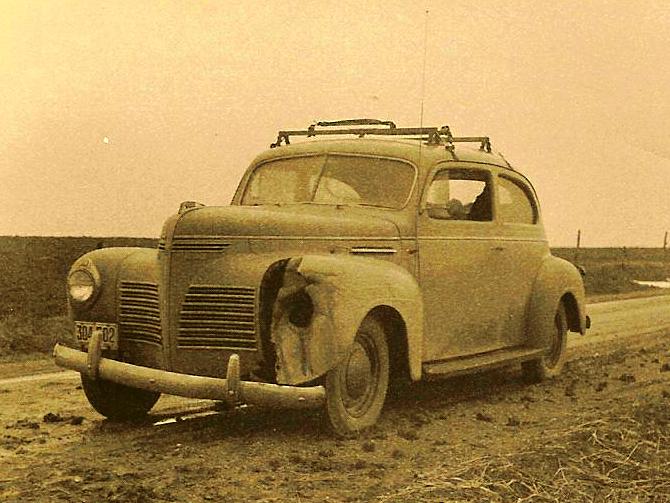
I sit in the car’s front seat, a 1940, cream gray Plymouth sedan with a crushed front fender and broken headlight. Two days earlier, on the Indiana Turnpike, an on-coming car lost a rear wheel that bounced across the median and hit us. The windshield is grimy but I can see all right, and look down the lane toward our new home.
County Road 26 is made of clay covered with gravel and passes our farm on high ground. Melted snow and spring rains have made the road is a soupy mess of ruts. The uniform overcast makes the sky look like a gray flannel sheet. Pewter-colored ditch water and puddles reflect the sky. Fallow fields with slick furrows resemble charcoal. Last year’s grass, patches of weeds, and cornstalks seem ashen. I remember gray.
Warm air, sun, thawing ground.
Dad opens the car door, pulls on four-buckle overshoes, and shrugs into a jacket. Slowly, he slips and slides his way down the muddy lane, past the half-dead willows, past the barn with its dim coat of indistinct paint, and enters the weathered farmhouse beneath the leafless oaks.
Mother waits in the car with my sister and me. Mom is quiet and wears a long face of concentration. I will come to know that expression well. It isn’t fear but the calculation of all the unknowns and contingencies she might face.
A tractor’s purr catches my attention. Dad and another man, my uncle, drive toward us towing a trailer filled with straw. Chains on the tractor tires clink like merry sleigh bells in the dreariness. With everyone settled in the trailer, we roll down the muddy slope to our house.
The main room seems huge to me. Pieces of furniture rest in great piles – sofa, bedsteads, bureaus, and chairs – amid crates of china, boxes of clothing, and my red tricycle. Faded wallpaper and sagging plaster don’t catch my attention as much as the hulking, pot-bellied stove crouching in a corner, like a sooty bear, waiting to pounce. I’m afraid of it.
After a quick inspection of the cold house, we drive to Janesville and stay with some cousins. When we return, the potbellied stove waits outside for the junkman, the toilet and shower function inside, and the kitchen is ready for my mother.
A barn of indistinct color
They name it The River Farm.
Over the years, as we work the land the land works us. We drain the marshes, tile the low ground, dam the gullies, straighten the creek and plant trees. And then, when we are done with active farming, we breach the dikes, rip up the tiles, and planteoaks and prairie grasses where soybeans once grew. Dad was never happier than when on his farm.
He died at home and we buried his ashes in our woods at an unmarked place, in a clearing, on a ridge above the river. He rests next to Mom, my great aunt, my grandmother, and my uncle.
I remember this day and its details because this is the place that formed me as much as any place has shaped me. This where I learned responsibilities, developed a knack for making things work, understood rhythms of the natural world, and grew up in a life stripped to its essentials. Everything I ever learned later has a touchstone on this farm, in this community. Now, decades later, I look for and sometimes find in far-away places, people and situations that take me back to the farm and the neighborhood.
The farm that rims my childhood.
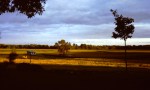
But I can’t go back. My brother, sister and I are settled elsewhere and none of us wants to live on the farm. Fortunately, we find a buyer who shares Dad’s land ethic and, with the sale, we all rest in peace. The farm’s title passes to the new owners in October and, on my way home, I drive up the lane and stop on County Road 26 in the spot where Dad parked the Plymouth in 1947. I take a last look down at the house. It’s larger and better now than it was then; and the barn is bright in its crimson coat. In autumn sunshine, the wild grasses shine in bronze and copper, sunlight glints off the pond, and the oaks on the ridge along the river mark my horizon – the rim of my childhood.
Late November. This is the perfect season for a day of thanksgiving – at least in Minnesota. Autumn is over, except on the calendar. The day for giving thanks comes at the end of harvest, as it should. Now the season’s harvest of corn, oats and soybeans – the fruits of considerable cost, risk, and sweat – was secure in the bins and cribs. Unless snow came early, we usually finished plowing most of the stubble. November days are cold, the sky is cloudy most of the time, occasional skiffs of snow blow through and winter lurks just over the western horizon. It’s the kind of weather that draws us closer to each other. Thanksgiving Day punctuated our year far more than did Christmas. Continue reading “Days of Giving Thanks”→
Have you considered the advantages of traveling slowly and depending on the kindness of strangers? That’s why I like to walk. It’s my favorite way to go from one place to another when time allows. The quality of travel varies with the mode. By going on foot I move at a pace where I can see everything around me and take the time to experience the country I am moving through and the people I’m traveling with. What’s the rush?
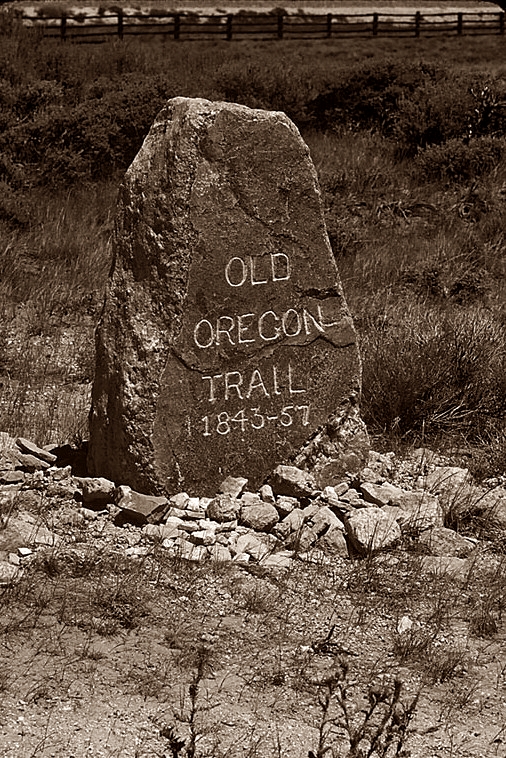
Setting out on the Oregon Trail
I came upon the pleasures of slow travel nearly 40 years ago when a friend and I hiked for 650 miles across the high plains of Nebraska, Wyoming, and Idaho. For nearly two months, we lived out of our packs as we tramped along America’s first superhighway–the wagon road known as the Oregon Trail.
The seed of this idea sprouted one sunny August afternoon near South Pass, Wyoming. I stopped the car at a historical marker for “The Parting of the Ways”. Behind the sign, two sets of ruts diverge in the waist-high sagebrush; one set aimed at the California goldfields, the other pointed to Oregon’s Willamette Valley. For many a westerner, a moment of decision; for me, an inspiration.
I walked along the Oregon-bound ruts for half a mile until I couldn’t see the car. Then I stared far west. What will I see if I keep walking? The question nudged me for two years until Geoff and I hoisted our backpacks at Scotts Bluff National Monument, Nebraska, and set out in dust storm to retrace the longest, undeveloped stretch of the Oregon Trail across open range until they vanished asphalt roads and barley fields in eastern Idaho.
Our simple maps, scaled at two miles to the inch, gave few details about what lay ahead. We didn’t have a watch, and we left behind such comforts as air mattresses and extra clothes. The best equipment in our kit were our personalities–we were each the other’s alter ego, the missing piece, the traits that made us greater than the sum of our parts. It worked–most of the time.
The Trail was never a single set of ruts but a broad corridor and we followed dirt farm roads for the first few days through the irrigated corn fields of the North Platte River Valley. Each day had its pattern: Rising at dawn, eating oatmeal and stewed fruit, hiking until midday, then a making a meal of fry bread and soup, napping for several hours in the shade of riverbank cottonwoods before taking to the Trail and walking in the low evening light of summer.
Morning glory and cactus.
Walking opens opportunities to notice the things that are invisible from a car going 70 miles per hour–the things that define a place. At 70 mph, Wyoming looks uninviting, a blur of gray sagebrush and glaring sunlight. At three miles per hour, the details are visible: the intense orange of globe mallow blossoms, smooth, white prickly poppies, and sky-blue flax. On foot, we moved to the rhythmic crunch of footfalls on the gravel; felt the sun’s reflected heat seeping through our boots; watched vultures wheeling in silent gyres like bits of black paper in the wide sky and over our shoulder, we watched afternoon thunderclouds atop Laramie Peak drift toward us.
Weather was our intimate companion, and the summery copulation of temperature and humidity produced sweat, thirst, and fatigue. Wind was a fickle friend, one day it’s a cooling breeze that wards off sweating but the next day it’s a dusty blast from an oven. Evening was usually the best of times, when the wind lay down for the night, cooler air flowed from the mountains, crickets sang, and we came out of mental hibernation and talked to each other.
Our daily thunderstorm.
Although we saw very few people in seven weeks, we didn’t travel alone. The backs of our simple maps held typed excerpts from the journals of those who crossed the Trail a century before us . Explorer Robert Stuart (1813), mountain man Jim Clyman (1829), Lt. John C. Fremont (1843), humorist Mark Twain (1862) and many ‘forty-niners guided, advised and entertained us daily.
Many times, when we rested beneath a tree, or along a dry creek, we read their words and compared what we saw with their description of the place. In 1977, the big energy boom hadn’t yet disturbed too much of the area and what we saw largely matched the view of the pioneers. We lived in a time warp. Thank God!
We planned to be completely self-sufficient but the kindness of strangers was always a bonus. The dust storm died at the end of the first afternoon, the bluffs glowed in the red sunset as we asked for water at a farmhouse. The farmer turned on a hose and then asked what were we doing and why were we doing it. “Wish you’d come sooner. We would of like to have you eat with us.” Before we left, his wife gave us a batch of peanut butter-oatmeal cookies. So began our travel with the kindness of strangers.
Geoff and I started the trip bickering over the proper walking pace. He wanted to make three miles an hour for seven hours a day. I argued for a two miles an hour for 10 hours a day because I knew his pace wasn’t possible with heavy packs. I said okay figuring experience would slow him to my pace. It did, in the end, but not until he raised blisters the size of silver dollars and I bruised my Achilles tendon.
“You want to see a doctor?” Geoff asked, massaging my swollen ankle.
“No! He’ll tell me to take aspirin and stay off my feet,” I said, popping a couple Tylenol. “Let’s find a place to lay over a couple days. If it doesn’t get worse, it’ll get better.”
At dusk, a farmer let us camp in a vacant pasture that had two ponds stocked with bass. I thought we’d died and gone to heaven. For two days, we rested, swam often, and ate our fill of fresh fish we caught using my fly-rod and grasshoppers.
Historical markers, landmarks, and graves mark nearly every few miles of the Oregon Trail. Some sites are off the highway, but some of the best aren’t easy to find and a few aren’t marked at all – that’s the draws.
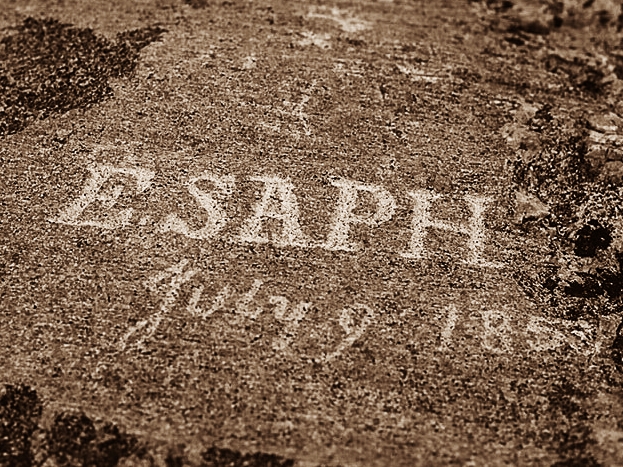
A name for posterity.
We usually stopped briefly at the well-developed tourist attractions, like Ft. Laramie National Historic Site but lingered at the undeveloped ones like the Guernsey Ruts. Here the wheels of passing wagons cut a deep trough into the marl ridge near the Wyoming town of that name. The country hadn’t changed much, and the view from the ruts was that of a century ago. We camped in a pasture a few miles farther at the foot of Register Cliff where forty-niner carved their names in the soft rock. A third generation rancher’s family donated the site to the state.
Despite the interest in historic sites, my inspiration for the trip was to experience the Great Plains environment of short grass prairies, alkali flats, rocky ridges, hot sun and high winds for long enough to truly know the West. I felt an emotional lift after Register Cliff when our Trail left the North Platte River for higher and drier ground. Now we were under the Big Sky, crossing the country I wanted to see. At last!
The ruts are still there.
No fences blocked our way, the traces of wagon ruts showed through the thin sod and, in all directions, spread the short grass prairie dotted with sunflowers and clumps of sage. The vastness, the smell of air, the light filled us with a wild joy. Our packs felt lighter and we easily crested the sweeping ridges, made noon camps beneath cottonwoods in anonymous arroyos, and camped for the night under clumps of scrubby pines. But for the absence of buffalo, the country remained largely unchanged.
Within days, we began to think of ourselves as kin to the mountain men, the individualistic trappers who first mapped the West. Without the encumbrance of wagons and teams, no amount of imagination could transform us into Oregon pioneers. With only each other for company, we thought of ourselves as reincarnated mountain men and lived in a psychic bubble of our own creation.
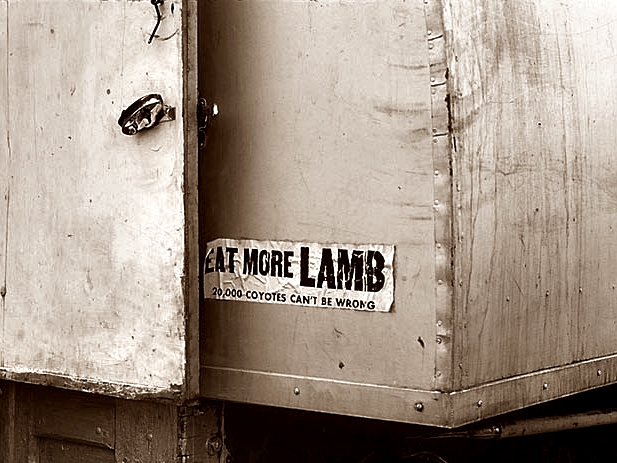
Defiant sheepman.
Two weeks into the trip, the urban world and the norms we had known seemed alien if not ridiculous, at times. After a couple days in flesh-pots of Casper (population 50,000), we happy to leave the city behind us–-but only after we gave a newspaper interview and I sealed a deal to write a series of articles about the trip for the daily newspaper.
Hiking takes a lot of water, and it’s the one thing we couldn’t replace on our own. Many times we were down to our last pints before we hit a stream, a windmill or an isolated ranch. The Trail West of Casper drifted through 50 miles of barren hills with springs of caustic soda as strong as Drano. Like the pioneers, we dreaded this stretch because we couldn’t carry enough water for two days of hiking. The only potable water was Willow Spring, somewhere in the hills. But which spring was it?
Months before we started, I wrote to a man who used to ranch in these hills and asked about the spring. He was retired and asked me to call him when I arrived in Casper. He wasn’t home when I called, so I left a message. He didn’t call back and we started out not knowing where to find Willow Spring.
We conserved water, camped after 20 miles from Casper, and then started again, sipping water to make last. Pools of seep and spring water beckoned from the swales and arroyos, but all had a tell-tale white alkali crust. At midday, we sat in grass by the jeep road to consider our next move. A few minutes later, an older pulled up to us in a pick-up and called my name. He got my message and had been following our tracks in the dust.
“Willow Spring is about a mile ahead,” he told us. “You’ll find it inside a shed at an abandoned ranch. You can’t miss it.” Then he climbed into the Dodge to complete some errands. Ah, guardian angels.
We were fortunate to reach Independence Rock a couple years before the historical interpretation industry limited access and put up signs to tell us what we needed to know. It was deserted and we ate our lunch , climbed to the summit and looked at the names chiseled into the granite. That night, and for several nights thereafter, we camped and caught trout in a nearby pasture at Devil’s Gate where the Sweetwater River passes through a small gorge in the granite mountains.
Camping in mountain frost.
So began the most beautiful stretch of Trail, and the part that sticks with me after nearly 40 years. It’s the 100 miles along the Sweetwater River, from Devil’s Gate to South Pass on the Continental Divide. The stream’s water was clean enough to drink, the grass was lush, the mountains of pink granite made grand scenery, and herds of antelope entertained us.
We rarely saw anyone, and fervently hoped we wouldn’t because they might break the illusion of living a reincarnated life we had lived 150 years before. Meeting others would be like going back to earth after dying and entering heaven.
One night we camped under a granite ledge to ride out a thunderstorm, warmed by a fire, and lulled to sleep by owls. Another day, we made a noon fire on the exposed flanks of the Wind River Mountains under a gray, chilly sky. Nearby, a marker of iron pipe commemorated some Mormons who died there in an early winter storm. A note inside the crossbar asked passersby for any information about the unknown dead. Without their names, the dead aren’t at rest.
We clambered out of Sweetwater Canyon one morning and passed the abandoned pits and detritus of several mining booms near the ghost town of Radium Springs. The rusted frames of 1920s cars mingled with rotting log cabins, wooden wagon boxes, and pieces of iron. An angus steer greeted us from the door of the defunct saloon with a swayback roof.
Trail Marker. South Pass
South Pass made westward expansion possible. We crossed the pass over a broad, sere plain at 7,000 feet where a solitary granite boulder marks the Continental Divide. We felt humbled standing atop the continent, two tiny figures in a vast, empty plain. The soil is poor, moisture is scarce, the climate is so severe the sagebrush scarcely exceeds a foot in height. Geoff studied this ‘end of the world’ landscape, and said: “Any cow grazing on this range would be glad to go to the slaughterhouse.”
That night we camped on a mattress of pine needles, sheltered by trees for the first time in nearly a month. The full moon rose in majesty over the plain of South Pass, lighting one side of the pine trees, and throwing long shadows across the ground.
Two nights later, we said goodbye to kindly rancher, and set out at moonrise to cross the Green River Basin, 50 parched miles of sandy plains overgrown with sagebrush between the mountains and the Green River. Wagon trains often crossed at night to save water and stock. Under the full moon, the sandy tracks of the Trail looked white against the black sage. As we hiked, a huge meteor streaked overhead. To the south, we saw the silhouette of Squaw Teat against the moonlit skyline. The hours passed slowly and, at times, we dozed as we walked.
The last 20 miles to Green River tested us more than any other segment. In the clear air, we saw the cottonwoods growing along the river but they never seemed to draw closer as we walked toward them. The morning turned hot, the wind died, and the sand dragged at our feet. My energy ebbed, my head ached, my pulse raced, and I had an onset of diarrhea. Walking was an act of will. I told myself, I’ll survive this if it kills me.
We reached the Green River at dusk–grateful. Two days later, we straggled into the hamlet of Big Piney and I knew I was ill. Geoff booked us into the ‘motel’, a collection of mobile homes, and I went to bed alternating between sweats and chills. I had a fever and feared this might be the end of the trip. Geoff wasn’t ready to consider that. Ever practical, he found a solution.
“There’s no bus service here. We’d have to hike somewhere to can catch a bus,” he said. “We can’t do that until you’re better. I found there’s a medical clinic about a mile or so from here. Let’s check it out. Once you’re well enough to hike to a bus you’ll be well enough to keep hiking.”
He was right, of course. The next day we walked a mile to the clinic. It had no doctor, only a nurse–but a retired Army nurse. She took my vitals, listened to my heart, and told me I had the same virus that was going around. Then she wrote a prescription for paregoric, an anti-diarrhea opiate, and gave me a list of foods I should eat until my innards recovered.
“Come back if you’re not better in 48 hours. Otherwise, have a good trip.” She held out her hand. Thirty-six hours later, we checked out of the motel and hit the Trail for the last leg.
Author at Trail’s end.
Our two last weeks took us up, into, and over the Wyoming and Caribou Ranges through stands of aspen, pine and fir; across streams flanked by multi-colored gardens of paintbrush, sneezeweed, bluebells, and orchids. It was only the first half of August but frost rimed the tent at night. From the serrate Wyoming Mountains, we came into the Mormon settlements of Star Valley on the Idaho line. The fields of ripe barley and the small farmsteads under cottonwoods reminded me of Minnesota. An old man let us camp by a field at his dairy farm, then he and his grandson brought us two quarts of fresh milk and telling us to leave the bottles by the gate when we leave.
We hadn’t planned the exact ending to the trip but the end mirrored the beginning. All signs of the Trail petered out beyond Star Valley among the barley fields and we were forced to hike along the paved road. Nothing changed a mountain into a bum faster than asphalt. We tramped over the low, Caribou Mountains into the lush grassy basin of Gray’s Lake where whooping cranes nested and sat in a ditch to consider our next move.
This was the end of the Trail for us and now we needed to find a town with bus service. Our map didn’t show any towns or major highways. Trusting to karma, I asked directions at a farm with the same Ford tractor my father used. The amiable cattleman summered his herd there and invited us into the small, white house and told us how to reach Soda Springs, a few miles away. Then his wife invited us to lunch–lamb chops, potatoes, lettuce salad, home-made root beer, and oatmeal cookies. We said no but not too strongly, they insisted, and we agreed to stay. It was our intention all along. Ah, the kindness of strangers!
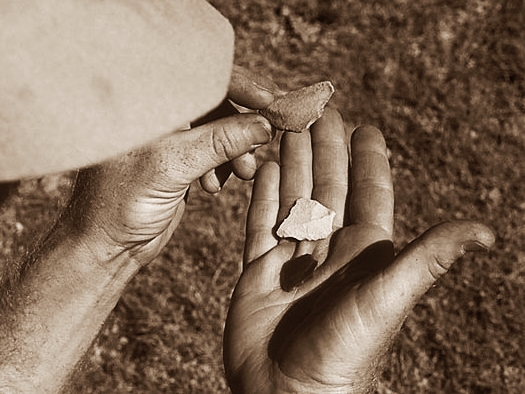
Worked flint from tepee rings.
The Oregon Trail was America’s great road west until completion of the transcontinental railroad. Thus, it was only fitting that we returned home on the train-– the Amtrak version of the Northern Pacific’s Empire Builder. We stood on the platform between the cars watching the west roll by in the sunset. We’d seen the elephant.
Shortly after this trip, I read letters written by my great-grandfather as a 19 year-old infantry private. He would have recognized most of the route we hiked. In the summer of 1867, he covered 1,700 miles of wagon trails, from North Platte, Nebraska, across Wyoming to the Utah line, then north to Soda Springs, back across the Wyoming Range and South Pass on the Oregon Trail to a fort just east of Casper. It was easy to imagine him there, and easier to feel I was living his life again.
Such travel is only possible at a human scale and tempo. Every one of those miles taught me volumes about myself and the meaning of determination, persistence, and downright stubbornness. At the same time, I learned about the innate decency of people, their uncommon generosity, and compassionate curiosity. It was a great lesson in what it means to be an American.
October marks a year since my brother, sister, and I sold the southern Minnesota farm where we grew up, where our parents lived their dream, and rest forever beneath woodland phlox in the woods. Until I went to college, ‘The River Farm’ was my playground, a magical place that evolved as I did. I have let go of the physical space but not the memories of my inner childhood.
I first saw this playground on April 10, 1947, the day we arrived at our farm as migrants from New Brunswick, New Jersey. I was three years old and remember the day in shades of gray. The ashen hue of our muddy 1940 Plymouth, the steely tint of the low clouds, the pools of pewter colored snowmelt, and the charcoal smudges of thawing soil.
The sun came out, April turned into May, and a curious three-almost-four-year-old made everything a toy, a fun house. For companions, I had the geese that hissed when I approached the goslings. Mom taught me how to a bottle to feed a lamb. I imitated Dad and gassed my trike, an imaginary tractor, at the tank.
When I was a little older, and my cousins came visiting from town, we played hide-and-seek in the barn, hiding among the bales of hay. At night, we played kick-the-can, lurking until the last minute in the shadows from the yard light, and then kicking the can by the well.
The pasture and its winding creek became my Wild West where my pals and I played cowboys. A little later, as I approached middle school, I often sat there and gazed in wonder at at the cumulous clouds, majestic cauliflowers of air and vapor, delicately tinted in shades of pearl, coral, and blue-gray, sailing like Spanish galleons. They looked so solid, like mountains yet, in the eye of my imagination, I saw narrow canyons and deep caves. Watching clouds feeds the imagination.
Sometimes, the farm wasn’t a playground. As I grew up, I inherited chores suitable to my age. For years, I fed the chickens, then collected, and cleaned the eggs. I hated it. Chicken care was a woman’s job; real men kept livestock. By the age of 12, I spent hours on a Ford tractor tilling the soil for planting, or spreading manure, or plowing. An active imagination is necessary for enduring the monotony and I spent it with dreams about learning to fly.
Most of our fields lay north of the winding, prairie river dividing our farm. South of the river was 120 acres of hardwood forest, mostly walnut, basswood, and burr oak. After the age of 12, the woods became my playground in all seasons.
In summer, I hiked a half-mile to swim in the river’s deeper holes under cut banks. In September, I hunted squirrels among the burr oaks on the ridge. In October, I hunted ducks along the river, and pheasants in the weed patches and cornfields. When I got older, Dad and I spent winter days there thinning the oaks, and hickories, and pruning walnuts to produce good lumber – some day.
Prairie blizzards altered the playground with huge drifts in the windbreak where I dug snow caves and built forts. My pals and I had fierce snowball fights, and went sledding down a hill where I made a ramp so our sleds would ‘fly’ for a couple feet.
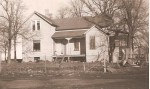
Our draughty farmhouse (ca. 1878) sheltered us well, and on winter Sunday afternoons, my parents listened to classical music on CBS radio while my sister and I played Monopoly or read books. We raised crops for exactly 50 years, and most year, we celebrated Thanksgiving dinners with cousins and friends. From the big table, we looked out across the corn stubble and plowing dusted with snow, corncribs filled with the harvest, satisfied and secure at passing another crop year.
The playground changed when Dad retired the fields and enrolled them in a conservation plan. The former fields of corn, soybeans, oats and alfalfa became switchgrass, timothy, and oak plantations. He loved his farm, conservation was the right thing to do, but I lost the visceral connection I felt as a child.
What is the price you put on memories of the places that formed you? Is there a value I can put on the pasture, the windbreak, the pattern of corn, soybean, oat, and alfalfa fields? Their colors changed throughout the year as they matured. What can replace the sound of my mother working in the kitchen, preparing a Thanksgiving meal while chatting with relatives, perhaps dropping in a French phrase? How can I replace the memory of hearing Dad, whistling show-tunes in the evening air as he drove the tractor, preparing a field for spring planting?
I have the memories and photos, but I don’t have the farm. Without the cycle of cropping, plowing, and planting, it isn’t the farm I knew, the farm that imprinted itself on me. Nor is it the same farm without Mom and Dad. They lived their dream to the end. That dream is done. Neither I nor my siblings will live there so we sold it to another family to live out their dream.
Today turned out to be all the weather geek said it would be – and more. The rime of frost on the edge of the garage roof – white on brown – lends a nice touch to daybreak. Then – gone – a filmy coil of rising vapor – like a morning prayer.
Spring warmth spreads sweetly – like puppy love – on a sweeping south wind. I sit in the sun, enjoying a bottle of porter and the last of the cashews. In my wooded Minnesota subdivision, where the smallest lots measure a quarter acre, our houses sit far apart among the oaks, elms, and honeysuckles. No sidewalks connect us – each house is an island – and we are an archipelago of suburbanites on a cul de sac. Friendly – we know each other – but private.
Some neighbors migrate south for the winter and the rest of us simply ‘hibernate,’ denning up in our houses, going and coming through the garage. Now and then, we meet each other after a humongous snowfall when we join to push a stuck car off the street or happen to shovel our driveways at the same time. We are winter introverts and this is enough neighborliness in the cold.
The neighbor across the road is loading firewood into the bed of his pick-up. I walk down the drive, get the mail from the box, and stop to talk. He tells me about his shoulder replacements. We are both over 65 and commiserate on our respective aches and pains. Neither of us is ‘what we were cracked up to be’ even a few years ago.
Then I return to the lawn chair and sit in the soft lap of late afternoon with a book in my lap. I’m not reading but sitting as content as a sunning turtle, looking at a piece of the world that’s temporarily mine.
The season’s first flies buzz about in the sun, the wind soughs through the top of a neighbor’s cottonwoods, and the rattle last year’s leaves on my oaks. Green shoots poke through the thatch of lawn, now four shades greener than yesterday, thanks to a half-inch of rain. Pubescent leaf buds pop along the twigs on the chokeberry bush, ready to unfold like young adults in a day or two with a show of green. But that flash belongs to the morrow and is not yet a reality.
A mole, just out of hibernation, tunnels along the edge of the concrete walk, and leaves a long, low mound like a glacial esker. I don’t resent his presence today but I will in a couple weeks when I mow the lawn. I see no point in starting resentments early.
A gray tree frog utters a sharp, almost percussive, creak from a hidden place in the lawn. I can’t see him but I know his general location. Down the street, in the marsh by the blind curve, northern leopard frogs croak with Falstaffian glee – like men packed into a sports bars on game day. They croak the same phrases over and over – hoping to ‘score’ a mate.
Sitting quietly in the lawn is a respite from a writers’ conference. I’m humbled and a little intimidated after three days in the company of novelists and memoirists, poets and essayists far more eloquent than I am. Writing is a generous act, one of them said in a presentation. I believe it’s true. Does it take talent to be generous?
Six weeks from now – in a future not yet mine – I will reunite with the Macalester College class of 1965. No! This can’t be the 50th reunion already! It is true but I want to stay in denial. I feel an urge to slim down and tone up. Why bother? We all know we are half-a-century older. Slimming and toning can’t change anything, much less reverse the years. Besides, I’m wiser now than before. I guess that is something of being more than ‘I was cracked up to be’ back then.
This class is an unusually earnest cohort. We entered college as John Kennedy began his presidency. JFK’s idealism formed us while his assassination matured us. Most of us are still pushing new frontiers. When reunion day comes, we will sit at tables to discuss weighty questions about whether ‘we had it all,’ whatever it was. Said another way, we will consider whether life is ‘all it was cracked up to be.’ We will talk urgently about the things we still need to accomplish until prostrated by seriousness.
I remember graduation day, the high-minded the commencement speaker, his exhortation to pursue our dreams, and a rush to change the world. Along my way, did I pause often enough to appreciate the grass in its growing or listen to the tree frogs in courtship? Did I stop to let the moment take me by the hand and reveal itself to me?
The future offers no guarantees but no one told me. Experience taught me the future doesn’t belong to me in advance of its arrival. The future is a dream, a possibility and – sometimes – a nightmare because the future has no reality. For a long time, I lived for the future and completely missed the present. I know better now. Only the present moment is real. It is all I have. The past is lost to memory and can’t be changed. The future is a possibility beyond my control. Moment by moment, I live into the future – moving as blindly as the mole tunneling my lawn – feeling my way forward, seeking the right path. The present moment is ‘all it’s cracked up to be.’
A boy’s dream of being a forest ranger in the wild.
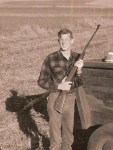
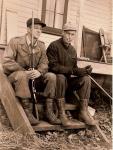
Ready to hunt–Dad and John
The wooded ridge where my parents rest.
I wasn’t quite seven years-old when the lineman from the phone company in Janesville, Minnesota, installed a wooden box – a Western Electric – on the living room wall. A crank projected from the right side, and the receiver hung in its cradle on the left. The daffodil-shaped mouthpiece jutted from the front. It looked like a museum piece Alexander Graham Bell himself had used – even when it was new. We moved onto the farm in 1947 but had to wait until 1950 to get it when post-war shortages ended. When we needed to call, we used our neighbor’s phone. The neighbors on either side of us had phone service from two different towns and the ten miles between the towns necessitated an expensive ‘long distance’ connection. At the time, we had the best of both worlds. We shared our phone line with 11 parties. Our number – 57F4 – had four rings.
My parents called by lifting the receiver and listening to make certain no one was on the line. Then then they cranked to call the operator – a pleasant-voiced woman called ‘Central.’ They gave her the number and she made the connections. When any of the others received a call, our phone rang too. My parents soon knew the other parties’ ring pattern. Rings invited snooping and sometimes my parents asked eavesdroppers to stop breathing loudly when they listened in! Lightning nearby made the phone’s bell ‘ding.’ Decades before Doppler radar, we knew an approaching storm’s ferocity from the frequency of the ‘dings.’ This wooden box with the daffodil served us for 15 years. In the early 1960’s the company added direct dialing and soon everyone had a private line and a rotary phone. The advent of private lines ended phone-sharing and eavesdropping, and with it, we all lost some of the close-knit feeling of being a community of farmers who knew each other’s business (discretely, of course). Privacy replaced community.
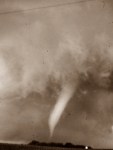
For a short time in my young life, I feared the telephone in certain weather. As a boy of ten or so, I feared lightning. Not the string lightning that zapped the earth from cloud to ground. I liked to watch that! No, I feared something I had never seen, and – so far – have yet to see. My fear began with an eerie story an adult neighbor told me. Heinz said balls of blue lightning sometimes formed on telephone lines during thunderstorms and entered farmhouses through the telephone. Then the balls rolled on the floor.
Southern Minnesota is muggy from late June to early August, and muggy, summer nights breed thunderstorms. On such nights, when the night air is absolutely still, you can hear the corn growing. It is a faint sound – or rather, millions of faint sounds – as expanding corn leaves split their sheaths. Nights like this often produce ‘heat lightning’ or ‘St. Elmo’s fire,’ a burst of static electricity without thunder. On hazy nights, it was possible to see lightning flickering malevolently, far away, along the horizon. I dreaded the still, summer nights when my parents left me to baby-site my seven-year-old sister while they went to play bridge in town. What if that awful ball of fire shot out of the telephone and rolled around on the floor? I soon out grew out of my fear and grew into a fascination for Southern Minnesota weather, such as early spring thunder snows with lightning.
Our farm had 160 acres of arable land and another 120 acres of woodlands south of the meandering LeSueur River. The woods were magic – a place where a boy could have adventures, real and imagined. For most of the year, the river flowed slowly over a bed of silt and sand. It wasn’t deep, and as children we waded across it. After a little parental guidance, we swam in it. After the age of ten, I went to the woods whenever I could, with or without the Remington .22 rifle, just to slip the parental leash and the endless chores of pulling weeds.
A low, T-shaped ridge ran north for a quarter mile from our south line to a high cut-bank above the river. I loved to hunt fox squirrels there among the burr oaks with low crowns and spreading branches. In the spring, I watched migrating mallards and teal dabbling in the flooded meadow below the ridge. A few deer lurked in the flood plain forest of soft maple, black walnut, black cherry, and cottonwood trees. In the early spring break-up, the flooded river pushed up spectacular ice dams. Later, a cloud of warblers, orioles, catbirds, and thrushes filled the woods with songs. My Scout troop often camped in an opening below the ridge. In the fall, I hunted ducks and learned to snapshoot as they rose from the river’s surface. Before I got a driver’s license, the woods was a haven, a hangout to be safe but adventurous. My mom and dad loved the woods, and sometimes camped on the ridge during the songbird migrations, when the wild phlox carpeted the woods. We buried their ashes, but not their spirits, in an opening where they used to camp. Some things defy the grave.
At puberty, I began to think about serious, grown-up careers. One of Dad’s friends, an older man named Ed, had been a U.S. Forest Ranger and advised on us our woods. He was almost a member of the family, and often stayed for a meal and conversation. Ed knew more about hunting, fishing, and camping than anyone I knew and I eagerly learned from him. When dad was too busy with farming, Ed and I often went hunting, fishing, or camping. In his wool shirt, and puffing his pipe around a fire, he told wonderful tales of his life as a ranger. I idolized him for a few years because he had lived – or said he had – the kind of life that appeals to a 13-year-old boy.
Ed’s stories fed my dreams of a career as a game warden or forest ranger. It was manly, adventurous outdoor work. I would be a well-armed game warden looking for poachers, or a forest ranger battling a huge fire. Rangers and warden had to know a lot of natural science, but I already knew a lot about biology from simply living on the farm. By high school, however, I knew the old-fashioned woodsman’s life I idealized didn’t exist – if it had ever existed. Instead, I grew up to be a historian, camp and fish when I can, and wrote a book about rangers, forests, and the conservation of wilderness because some dreams are too good to let die.
‘Sloppy Joes’ are one of my favorite foods because the dish is tied to memories of a particular ritual on our farm. A ‘Sloppy Joe’ is a hamburger bun filled with a loose, hot filling of ground beef, onions, ketchup, Worcestershire sauce, and seasonings. My mother made them each fall for the opening day of pheasant season but we rarely had it otherwise. In truth, there was nothing intrinsically special about the taste of ‘Sloppy Joes’ except as an essential part of the day, along with several hunting dogs, our shot-guns, and canvas hunting coats.
Pheasant season opened each year at noon on the second Saturday of October. By then, Dad and I had posted the farm with ‘No Trespassing’ signs to keep out all but our hunting party. It was the one day in October when he didn’t pick corn, regardless of how ideal the weather. Our usual gang of hunters arrived about 11 a.m.: Mom’s cousin John, Ed the ranger, Al our dentist, Irv the feed mill manager and his son Buddy. We ate buffet style, and helped ourselves to buns, ‘Sloppy Joe’ filling, dill pickles, potato chips, coffee or pop, and Mom’s chocolate chip cookies. Well-fortified with lunch, we went out to hunt. Part of the ritual lay in the way we swept the fields, moving in almost military formation along the fencerows, through the weed patches, across corn stubble, and then skirting the river before hunting back toward our house for a second helping of coffee and cookies. I haven’t carried a shotgun or hunted pheasants in more than 40 years. Yet, the passage of time hasn’t dulled my delight in a plate of ‘Sloppy Joes.’ The goodness doesn’t come from the ingredients but from the memories.
I first knew ‘home’ as a drafty, gray house set in an oak grove on a farm in southern Minnesota. It is April 10, 1947, and we have just arrived from New Jersey under a leaden sky after the rain has given the black, fallow soil an oily sheen. I am three-and-a-half years old, and see my home through the mud-smeared window of our 1940 Plymouth sedan.
As a child, I don´t question the defects in our old house and even older barn. They are a natural, unchangeable part of all that makes up ‘home’, just as much as my father’s blue eyes and my mother’s premature gray hair are integral aspects of my parents. At the age of four I experience the world as an organic web of things living and inanimate; cows and barn together, tractor and fields, in a unity of relationships whose separate parts I don’t yet distinguish.
Dad´s fascination with the soil verges on excitement. Southern Minnesota’s earth is the product of decaying grass and plants that built up, millennia by millennia, to produce ‘black gold’ in the form of highly fertile soil for raising corn and soybeans, oats and wheat. Agriculture is a highly choreographed ballet of fungi and bacteria, insects and worms, sun and rain, heat and cold, seeds and roots. These hidden creatures and forces move together as the plants draw nutrients from the soil to produce corn, eight feet tall and heavy with fat ears; a harvest to sustain for a year.
As a city man turned farmer, my father quickly learned how our lives are entwined with the invisible life of the soil. Neighboring farmers talked of ‘working up’ their corn ground, as if it were something inert to be acted upon. But dad didn’t think that way. His words and actions were those of working ‘with’ his corn ground; as a team. And after the crops took all the nutrients they needed, and we harvested the grain, we plowed under the stubble, feeding the microbes that broke down the plants and released the nutrients to the soil for next year’s crop. As I grew, dad never missed an opportunity to impress on me, along with lessons in courtesy and respect for others, the simple idea of the soil as a living thing that – like a child – must be nourished and enriched and protected. In our home, the care of the soil was care of the family.
Across southern Minnesota, only one day in four, on average, is cloudy and rain falls less frequently than that. Most of the time we welcomed the rain, a few times we have prayed for it to fall, and at other times we prayed for it to stop falling. The kind of rain set the mood for the day or the season as surely as my mother’s tone of voice set the mood in the house.
As March days warm, flurries give way to slow, disconsolate showers dripping from a deck of flat, gray overcast. It’s a gloomy kind of rain holding out the promise of real spring some day, but not that day. In the long hours of daylight before and after the summer solstice, the earth warms and rain falls as frontal storms blow through. As a boy I spend many afternoons fascinated by the cumulous clouds building along the southwest horizon and riding forward as billowing mountains, like whipped cream, seamed by shady canyons where my imagination plays hide and seek with whatever mythic creatures might live there. Such rains come in a rush, driven by wind, the droplets soaking into the cracked soil, percolating to the roots of growing corn. Dad and the other farmers hope these rains are ‘soakers’ and not violent ‘gully washers’ that will send our prairie river over its banks and into the fields.
Rain halts the outside work and my dad relaxes, knowing this and other well-timed rains assure the heavy harvest in a few months. But we are less welcoming of rain in September and October, before the harvest is in. We can’t harvest wet corn; we want the summer days to stay a little longer, to linger with us like a sweetheart on the front porch, unable to say good-night. Living on a farm you never forget that a rainy day isn’t about your convenience or inconvenience; you know it’s about something larger of which you are a very small part.
Without rain and soil I have no sense of ‘home’. Within me, these three are inseparably bound up in a feeling beyond emotion. It is a sense of being settled, rooted; of being bound up in a web of being far greater and more profound than my own sense of self. It is belonging to a moment of fulfillment ordained by Providence or the cosmos. It’s an unquestioning acceptance of the rightness of all things, if even for only an hour. My choice has nothing to do with this sense of ‘home’ because this moment, every moment, is ‘just how things are’ and nothing can change that. It’s perfection.
I felt and still feel this connectedness on days when the rain falls softly, steadily, giving the soil enough time to soak it all up and dissolve the nutrients bound up in grains of mineral, or dead corn roots; to feed the myriads of fungi and bacteria that are the silent partners of every farmer. Listening to the rain, even in the city, my thoughts and memories return to the days when we had little or no work to do and stayed indoors. Gathered in the living room, my mother works on a crossword puzzle, my dad reads a book, my sister and I play Parcheesi spread out on the floor. And if it is a Sunday, we listen to the New York Philharmonic Orchestra on the radio.
Now sixty years past childhood, my parents are dead and their ashes rest in the soil on a wooded ridge across the prairie river that cuts through the farm. They are forever at ‘home’. The title to the land now belongs to another, a friend, but the ‘home’ with its soil and rain remains with me. Whenever I sit quietly, listening to the rain falling gently, as fat droplets ‘plop’ hitting the soil, I feel the family at home, gathered in the house. We rest, the soil rests, the rain rests, and in my time, I will rest in the soil where the rain falls gently.















 R. Newell Searle