An Adverse Possession

An Adverse Possession

Chapter 1

An October rain beat a melancholy patter on the fallen leaves. In the dim light of daybreak, the three-story house loomed dark and angular against the cloudy sky but for a single light in a first-story window. Inside the house, Boston Meade shuffled a half-dozen clippings into a folder marked Runyon Mineral Spring ~ Adverse Possession.

He weighed the clippings in his hand and made a wry face. All I accomplished this summer. A few stories. Dozens of phone calls. Calls that led to more calls. More questions. Fewer answers.

He had readily agreed to help a lawyer find a recently retired farmer in a property dispute. A task of a day or two. After that, he intended to dedicate the summer to drafting a book about a retired forester when he wasn’t writing his syndicated column for American Outlook. Tracking the farmer took time away from the book and the summer’s writing consisted of a half-dozen articles for the Alton County Statesman, southeastern Minnesota’s largest daily. They were collaborations with Ginger O’Meara, the paper’s editor. Though he owned the newspaper, she controlled it because he hired her with a promise to keep his hands off its management. He paused and reread one of his articles:

WHEN YOUR PROPERTY ISN’T YOURS—Waterford—July 21, 1986.

Robert Hartwell, M.D., of Waterford claims his family has owned the Runyon mineral spring since 1874. According to Justin Taylor the spring became part of his cattle operation when he bought Norman Becker’s farm in May 1985. According to Mr. Taylor, Mr. Becker secured title to the mineral spring because of his continuous use of the tract for 30 years.

Acquiring legal title to another party’s property is possible under Minnesota law through open, continuous and unauthorized use for at least 15 years and spending money to improve it. The process is called adverse possession or squatter’s rights.

After selling his farm to Mr. Taylor, Mr. Becker left the county and his whereabouts are presently unknown. Dr. Hartwell and Mr. Taylor will present their documents of title in district court on July 28. Meanwhile, anyone with information about Mr. Becker’s current location is asked to contact the sheriff.

A brief, economical statement of the case, he thought. Well, most of it, anyway. Good as far as it went. He didn’t foresee what was coming. All his career, he tried to observe, connect and report the facts. Once he agreed to help Morris Isaacs, he couldn’t pretend to be objective. Undesirable but unavoidable. He couldn’t say ‘no’ so, after he said ‘yes,’ he couldn’t back out. Not after the disputed title turned into a case of probable fraud. He realized then he had become an integral part of the story.

He removed the tortoiseshell glasses, pinched the bridge of his Roman nose and then replaced the lenses. Shaking his head in disbelief, he marveled that a dispute over an obscure mineral spring thirty miles away could blow up into a story as complex as some of his international assignments in Saigon, Mexico City and Beirut. Once he got his teeth into this story, he spent all summer chasing it backward and forward in time until it played out.

What mysterious power draws men to a life on the sea or in the soil, he wondered. Not because there weren’t other kinds of work. Certainly not for the money. Farming was dirty, physical labor with great financial risks and damned small rewards. On top of that, the Bureau of Labor Statistics said four of the ten most dangerous jobs were in agriculture. It must be in their soul. Taylor was consumed by his dream of ecological grazing. Hartwell pursued his driving vision of a wellness center. Possessing a piece of land wasn’t like owning a car or even a house. Soil was a living thing and losing the farm brought endless heartache—like a divorce or the death of a child. It was existential. He knew families that had lost their farm after four generations. It was a mortal wound. No man owned a farm, the farm owned him. Boston knew he could say the same for journalism. Poor pay, some danger and a profession hard to quit. He rose from his chair and stretched. Quit bitching. I brought it on myself. No good deed goes unpunished.

He sealed the clippings into a manila envelope and put that into a folder between several others in the filing case. Then he shut the drawer with a feeling of completion. It was nearly 7:00 a.m. and time to make coffee. Then his phone rang. “Meade here,” he said in a soft voice. Then he held his breath as he listened to the caller’s brief message. “Thank you for calling,” he said softly and hung up the phone. Climbing the stairs, he whispered, “Death be not proud, for thou art not so.”
Featured

Leif’s Theology

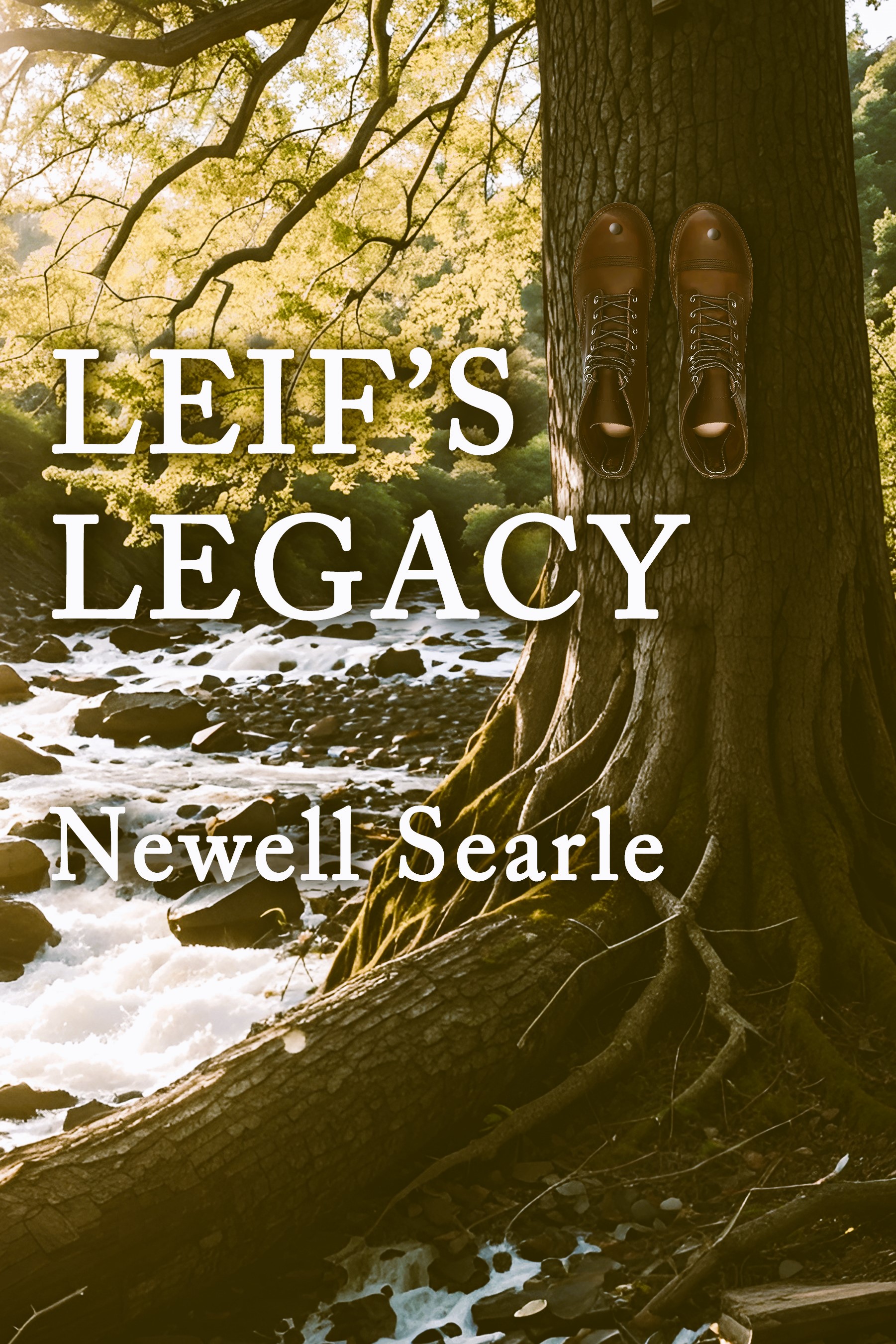
 An excerpt from Leif’s Legacy by Newell Searle, the second novel in the Alton County mystery series. The retired forest ranger is a man of opinions shaped by observation and hard experience. In this selection, he reveals something of his inner life to Boston Meade during the newsman’s visit at his farmstead at Tarn Lake:

The forester interrupted this reminiscing, drew on his pipe and pointed at the sooty terns and tree swallows that darted after insects just above the water’s surface. “See them? Notice how plants and animals support each other. A place for everyone. All equal. That’s how I come to forestry,” he said. “Studying natural science will reveal more about God and his intentions than what’s in the Bible or Luther’s catechism. If you’re looking for revelation, it’s all around you… in the creation.” –Leif Nielsen

Featured

Sense of Place

All stories take place in both time and space. Intriguing stories employ a keen sense of place as an integral part of the story and more than a backdrop. It must be a place that the stories’ characters enter and leave, places that sustain and threaten them, places they identify with or that repel them to the point of flight. Because stories can carry us across time and space if they occur in a place we can touch and remember. A good story needs a geography of length and breadth and height, signs of settlement if not civilization past or present, a place where plants and rocks aren’t generic but named. And, if it is Minnesota, the place needs some kind of weather. Being specific about the elements of a place implicitly conveys things that need not be said. If the action occurs in a valley woodland of maple and basswood trees, readers may sense without being told it is a cool and shady place. Or, if it is on a hillside grown to oaks and hickories, the reader may sense it is dry with mottled shade. Specifics both limit and extend the action.

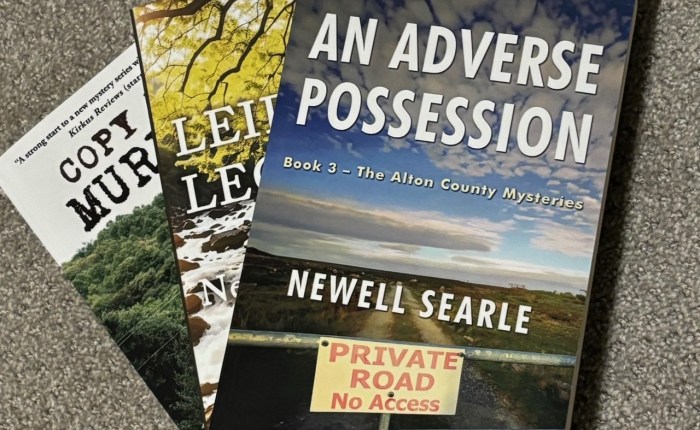
Kirkus Reviews gave Copy Desk Murders a coveted starred review for, among other things, “a fine sense of place.” In the fictional Alton County, each setting reflects a specific locale in southern Minnesota whose details I know well. And it is the specific details of these that affect what the story’s characters think and do. For example: The intern’s corpse lies at the bottom of a ravine. The serpentine road down that wooded coulee suggests several plausible causes of death and differences of opinion that will drive the story forward. This coulee is real and I travel down it to ready a trout stream. The city of Featherstone with its Romanesque core of red brick buildings is a composite of several towns in the region. Then I borrowed the real Louis Sullivan bank (National Register) from one of those cities and added details from others. Though I didn’t grow up in a three-story house on a hill, the landscape visible in the novel it is an expansion of what I often saw from our farmhouse porch:  

Grandfather Meade built the house among the bur oaks at the end of a low, limestone ridge he dubbed San Juan Hill. From there, he saw most of Featherstone a mile to the east where the late afternoon sunlight gleamed from the water tower, courthouse dome, church spires and grain elevators. From east to west, his gaze took in the fencerows that divided southeastern Minnesota into fields of corn and soybeans, oats and pastures interspersed with groves and farmsteads. He could see for miles until the countryside dissolved into the haze at the horizon. At this evening hour, long shadows stretched from behind the trees and fencerows. In the distance, a solitary thunderhead floated in the cerulean sky trailing a narrow veil of rain beneath it…  he gazed intently at the landscape he had known since birth. He wanted to imprint the vista of this perfect summer evening in his mind as an eidetic memory. His eyes took in the details of the familiar longing for amazement as if seeing them for the first time. Then it was time to leave.

A sense of place begins with acute observation. Pay attention to the landscape but don’t judge it. I have driven across the Wyoming plains many times but didn’t truly see what was in the sagebrush until I shouldered a backpack and hiked the cattle ranges from Nebraska to Idaho. At a walking pace, the details of delicate flowers, insects and animals came into view. This wasn’t the sea of gray sage I saw from the car at 70 miles per hour. It was the real world up close and personal.

As you draft your story, find locales that appeal to you, that inspire curiosity. Go to places you think you know well and try to see them as if for the first time. What are their salient details and what stories do those details suggest?

Backstories

FeaturedBackstories

In most if not all novels, the main characters have a backstory, a piece of their history or experience that acts like a gyro to both drive and inhibit them. We all have back stories It is often our dark side, that part of ourselves we would rather deny, ignore, forget or hide from others. At times, the shadow side can often liberate us and reveal who we truly are. In Copy Desk Murders, Boston Meade inherited his family newspaper and has just spent the first summer in twenty years in his hometown. He sits alone on the veranda of the family home disgusted with his last editorial on the evening before he is to return to Chicago:

He slumped in the chair, ruing his flawed valedictory, wishing he could reel in the words like a fishing line and cast them anew. After three months, they still treat you like an outsider. “They’ll be glad when you go tomorrow,” he whispered to the katydids. Glad but not as happy as you will be. You never could be yourself here, he thought. Not as long as everyone assumed you were Dad’s clone. Sure, you’ve got his build, patrician features and Roman nose. But that’s not who you are. But they didn’t accept that. Instead of Dad’s gregarious persona. you’re reserved like Mom was. You had to get out, go to Chicago as the only way to be yourself. For that, they criticized you for acting as if Featherstone and the Statesman weren’t good enough. Well, people see what they want to see, he thought. Being myself and outdoing Dad’s success, that’s what mattered the most. That’s what drove Vicky into her affair. That’s what led to the divorce. He shook his head as he recollected the June morning when American Outlook promoted him to its top job. And then learning of Dad’s death right after that. In less than an hour, he advanced to the career post he coveted as he inherited the job he had despised. “Jesus,” he whispered to the katydid. “The cosmos has an ironic sense of humor.”

A Slice of Humble Pie

Thanksgiving occupied a special place in the year  on our Minnesota farm and marked the end of the crop year. During the eight months between April and November, we tended the fields; tilling planting, cultivating, harvesting and then plowing. Every day, we minded the sky for the perils of the season—late spring frost, heat waves and drought, cloud bursts and flood, hail storms and early snow. Any one of these could wipe out a season’s labors. Most years, we sprinted through two months of fickle autumn weather as it slid from summery to wintery, picking corn, plowing stubble and culling the livestock before freeze-up and snow. After Thanksgiving, we relaxed a while.

Sometimes, snow on Thanksgiving

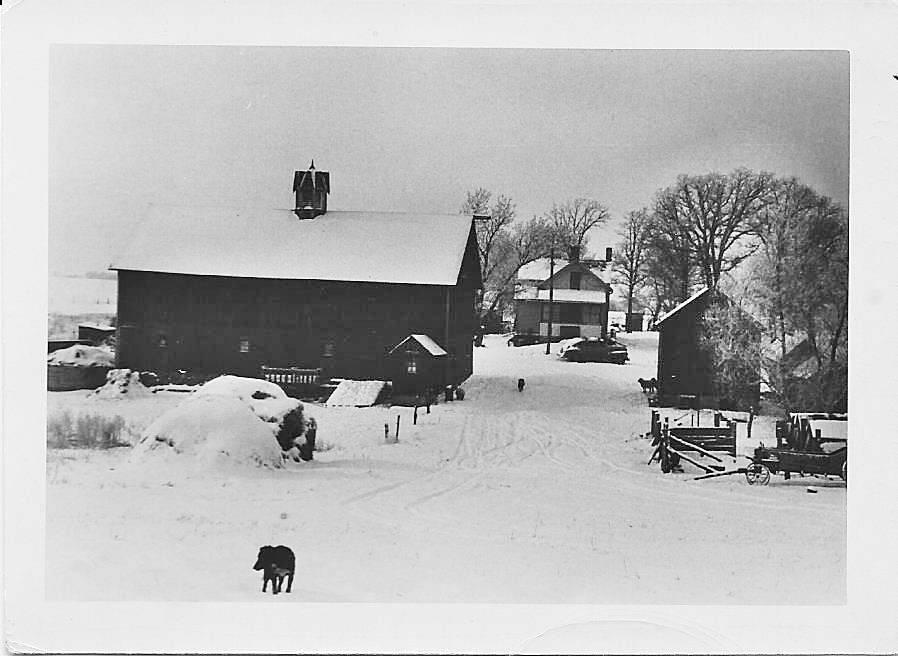
Our first on-farm Thanksgiving occurred in 1947 and the last one in 1997. I was four years old that first year when my mother roasted a goose and cooked the garden vegetables she raised. November snow fell early. Five acres of corn remained unpicked and the stubble stood plowed. Both must wait until spring. The cars didn’t start for several days. Yet, my urbanized New Jersey parents were grateful. They pulled up stakes that April to go farming in southern Minnesota despite the absence of agricultural experience. They were still in their twenties and still immortal.

We lived in a draughty house in need of paint. Rusty barbed wire fences kept livestock away from the house. Small hillside fields bordered with weeds ringed the slough in the center of things. A line of woods marked the winding river half a mile away. Nothing about this place predicted prosperity. But come it did. Drainage and tiling turned the slough into rich bottomland. Contoured fields arrested soil erosion, check dams formed small ponds and the woods improved under professional management. Wherever he could, dad planted trees and created niches for wildlife. Year by year, the farm became more productive of corn and wheat, deer and pheasants, songbirds and ducks.

The family at Thanksgiving

My mother shone in glory on Thanksgiving amid the roasted turkey, green tomato mincemeat pies topped with hard sauce, roast carrots, mashed potatoes, silky gravy and cranberry sauce. Cousins and aunts from town joined our table and afterward the adults played bridge and children played Monopoly and Parcheesi. For many years in the 1950’s,  the television station ran The Wizard of Oz on Thanksgiving. We loved the tornado scenes.

As my siblings and I grew up and married, our spouses and children replaced the cousins around the table. But some things didn’t change. November is still the grayest month in Minnesota—cloudy, cold and damp. At times, depressing. On Thanksgiving mornings, Dad and I still went outside to do some light chores, such as splitting and hauling firewood while mother, sister and wife finished preparing the food. Out came the good china, the monogrammed silver and crystal. These familiar roles and routines gave as much comfort as the food. A confirmation. We knew who we were, where we were and why we were thankful.

Abundance– a bumper crop

When all was ready, we bowed our heads and dad said a grace over the important things. Then the platters and bowls circled the table and our plates vanished under piles of mashed potatoes, slices of turkey, peas and smooth gravy. Looking out of the windows, I saw our newly plowed fields stretching to the river. Sometimes snow dusted the furrows and sometimes not. Yet the cloudiness never dampened our gratitude. We had the fields, the palpable connection, the umbilical between our livelihood and abundance.

We celebrated the last on-farm Thanksgiving in 1997. Mom and Dad were retired, no longer immortal but as lively as ever and wiser for their experiences. Arthritis crippled my mother at 80 but she was still a game chef. Dad and I still went outside to finish some chores, fewer now than in years past.

The boy formed on the farm

Thanksgiving, between helpings of turkey and pie, I realized this was the last time I would sit at this table and see the furrows, black and rich, awaiting spring. Gazing out and across the fields, I saw for last time the farm as it had formed me. Come spring, a crew would seed the fields with prairie grasses and plant clumps of oaks. This pleased dad but I felt melancholy—like the death of a friend—the permanent loss of intimacy with the living soil that had long sustained us.

Was I thankful? Yes, always! But I was more than thankful. I felt grateful and my gratitude grew from our intimate relationship with the soil. Dad thought of loam as magic stuff, a community of organisms that, with the sun, released life-building nutrients to produce fields of corn, soybeans, wheat and alfalfa. He held the soil as in a trust. Now, he was retiring the fields he retired.

Gratitude comes with humility and humility comes from recognizing you aren’t so self-sufficient that you don’t need the aid of anyone or anything. We are all part of an interdependent web of life. Our soil neither promised nor gave us a crop unless we collaborated with its organisms to produce it. We were married to the loam and tended it so it could tend, feed and sustain us.

The last harvest — 1997

I said a bittersweet goodbye to the farm that Thanksgiving. After 20 years, I still miss the palpable fulfillment of feasting in sight of newly plowed fields dusted with snow. I still miss feeling connected to a plot of soil I worked to produce corn, soybeans and wheat. I miss the spontaneous gratitude that comes when we were spared the worst of the weather. Or, if we were  struck, gratitude for our recovery from it. Most of all, I miss the sense of life living with the land and not off the land. And with that, I miss the simple joy of life lived knowingly along the tenuous margins of security. Thanksgiving on the farm taught me humility that prepared me to be grateful. On this day, a slice of humble pie still satisfies the soul.

Minnesota Weather—It’s Mythic Enough

Do you write off a mythic account as an entertaining  yarn, a bit of folklore or a campfire tale? In other words, does a mythic story lack truth? Minnesotans love to talk about their weather because it is truly mythic in its reality.

Mythic comes from mythos, a Greek word for allegory, narrative, and parable. In ancient times, mythos was used to explain complex, unknowable aspects of life—truths that defied explanation solely by logos—the Greek word for reasoned discourse, an account or an opinion. Minnesota’s well-earned reputation for its weather is truthful when recounted as both logos and mythos.

Halloween Snow totals 1991

My state lies in the crosshairs of three major climate systems: moisture streaming north from the Gulf of Mexico, cold fronts barreling southeast out of the Canadian Arctic, and a gentle Pacific flow off the Rocky Mountains. At any moment, any two of them may collide over the state. Non-Minnesotans think our weather is hyped, a fairy tale, like unicorns or Paul Bunyan and his Blue Ox. It’s true, we brag about our weather to non-Minnesotans, especially around the benighted hot-house souls living in warmer climates. We do it for effect. Our reality inhabits our mythic weather stories.

Today—November 18—is a perfect example. I woke at 7 a.m. to the loud rumble of thunder and strings of cloud to ground lightning, then a heavy downpour that swept floating islands of oak leaves down the street. When the rain stopped, hail plinked against the windowpanes and rattled on the wooden deck like peas in a can. The sun almost shone for a few minutes before heavy mist wrapped us in gray droplets. Sleet hissed as it fell on the leaves. An hour later, the snow began; first as a light flurry, then a heavier fall driven by the wind.

At this time yesterday (2:00 p.m.), the temperature stood at 58° F., the sun shone in a clear sky, and I mowed the lawn for the second time this November. Now, the lawn lies under a pallid sheet of snow, the temperature hovers at 34° F., the northwest wind howls at 35 mph with a wind chill of 21° F.

Today’s storm, like so many November storms , follows the southwest to northeast track of its many predecessors. As the Gulf moisture glides north, it is shunted northeast when frigid Canadian air slams into it over western Minnesota. As I write this, a blizzard with eight inches of snow, and counting, pummels the farms and villages west of Minneapolis. Roads are closed and the plows have pulled back. The plume of heavy snowfall is shifting northeast toward Duluth. For there, it will drift up the North Shore of Lake Superior and bury my cabin under a foot or more. This snow may last the winter. There is a stark magnificence in the North Country’s first snowfall. How I wish I could see it!

Blizzard. No school today.

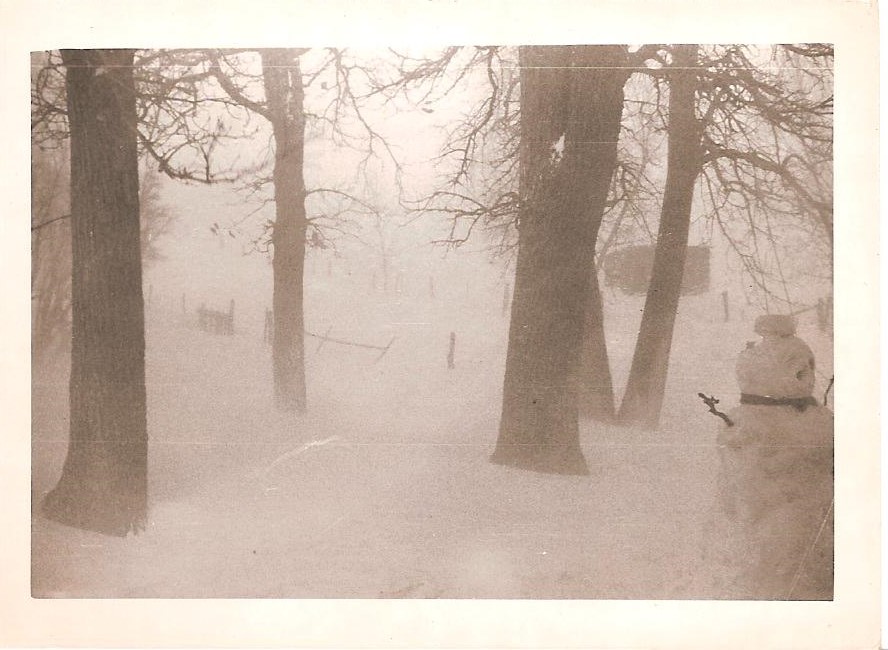
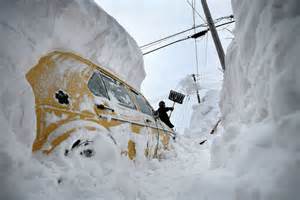
We cherish our blizzards because they test us and we survive them! They’re terrifying if we’re caught on the highway but we feel especially cozy and blessed in our homes. Blizzards leave us with eidetic memories. My favorites are those of my childhood on the farm. Heavy snow meant no school and no chores. I was 10 the year we had six blizzards in succession. They all started the same way. Mild temperatures on Monday and Tuesday, then light snow on Wednesday, heavy snow on Thursday, and white-outs on Friday. Drifts of four-five-and six feet piled up in the windbreak behind the house. They rose across the roads like mountain ranges. No one moved.

The 'Cat' clears the way.
The ‘Cat’ clears the way.

The county plow struggled to clear a lane by Saturday or Sunday. When it cleared the road, Mom raced to town for a week’s worth of groceries. I went to school on Monday, and things went back to normal until Wednesday, when the snow began again. This pattern repeated itself all of February and into March. We had so much snow the county hired bulldozers to buck the drifts rising eight and 10 feet. Dad hired a ‘Cat’ to clear our 400 feet of driveway—only to have it drift in again. I wondered at a world reshaped by the night wind—and I loved it!

Great Armistice Day Blizzard

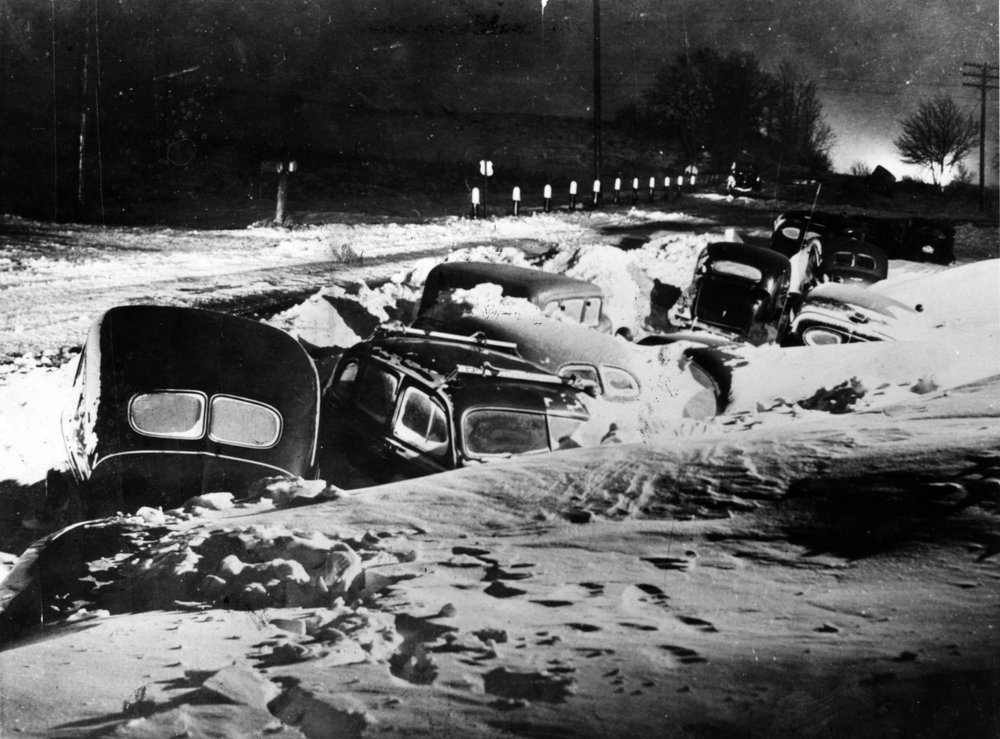
The elderly of the ‘Greatest Generation’ still remember the Armistice Day Blizzard of 1940. The day began clear with temperatures in the 60’s. Hundreds of men went out hunting ducks and pheasants in their shirt-sleeves and light jackets. Temperatures plummeted, from the 60’s on the 11th to the single digits by the next morning. Without warning, heavy snow—at least 16 inches in Minneapolis—moved in driven by 60 mph winds. When the storm blew out, 49 people lay dead, many of them hunters. This isn’t a myth.

Halloween blizzard 1991

Fast forward a half-century to the Great Halloween Blizzard of 1991. It followed today’s storm track. That evening, I took my girls trick-or-treating around the neighborhood. We left in a snow flurry and came home an hour later, scuffing through leaves and an inch of snow. How novel! We woke the next morning with 18 inches of snow on the ground, and a total of 28 inches by the time the storm ended two days later. Hardly anything moved for days, and the snow stayed until April. This is a memory, not a tall tale.

Is Minnesota weather mythic? Yes! But it’s not a legend or a fiction. It’s our reality. We don’t create myths to describe the weather of our state. That is isn’t necessary. All need to do is look out our windows and report on what we see. That’s mythic enough.


Days of Giving Thanks

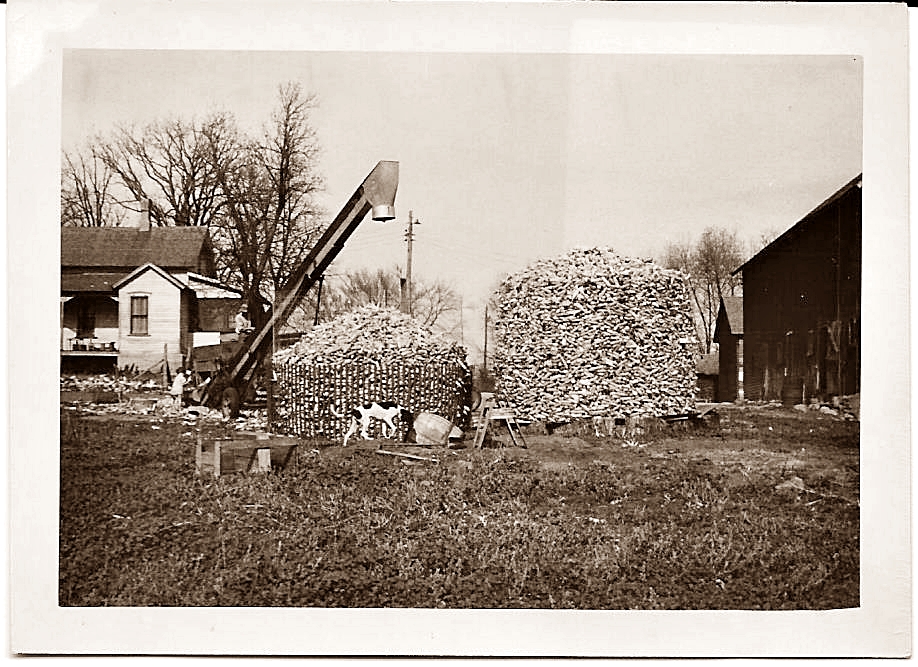
Late November. This is the perfect season for a day of thanksgiving – at least in Minnesota. Autumn is over, except on the calendar. The day for giving thanks comes at the end of harvest, as it should. Now the season’s harvest of corn, oats and soybeans – the fruits of considerable cost, risk, and sweat – was secure in the bins and cribs. Unless snow came early, we usually finished plowing most of the stubble. November days are cold, the sky is cloudy most of the time, occasional skiffs of snow blow through and winter lurks just over the western horizon. It’s the kind of weather that draws us closer to each other. Thanksgiving Day punctuated our year far more than did Christmas. Continue reading “Days of Giving Thanks”

In response to The Daily Post’s writing prompt: “Ode to a Playground.”

October marks a year since my brother, sister, and I sold the southern Minnesota farm where we grew up, where our parents lived their dream, and rest forever beneath woodland phlox in the woods. Until I went to college, ‘The River Farm’ was my playground, a magical place that evolved as I did. I have let go of the physical space but not the memories of my inner childhood.

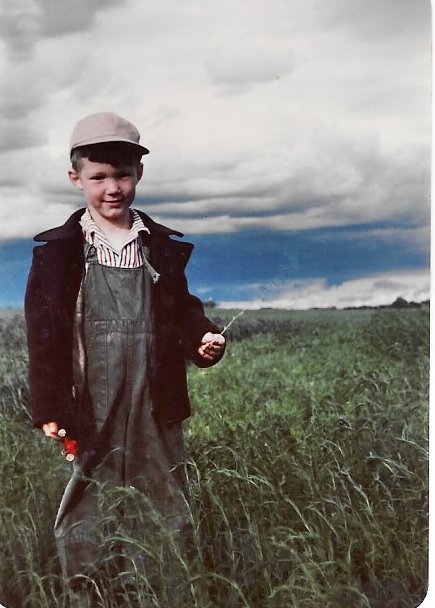
I first saw this playground on April 10, 1947, the day we arrived at our farm as migrants from New Brunswick, New Jersey. I was three years old and remember the day in shades of gray. The ashen hue of our muddy 1940 Plymouth, the steely tint of the low clouds, the pools of pewter colored snowmelt, and the charcoal smudges of thawing soil.

The sun came out, April turned into May, and a curious three-almost-four-year-old made everything a toy, a fun house. For companions, I had the geese that hissed when I approached the goslings. Mom taught me how to a bottle to feed a lamb. I imitated Dad and gassed my trike, an imaginary tractor, at the tank.

When I was a little older, and my cousins came visiting from town, we played hide-and-seek in the barn, hiding among the bales of hay. At night, we played kick-the-can, lurking until the last minute in the shadows from the yard light, and then kicking the can by the well.

The pasture and its winding creek became my Wild West where my pals and I played cowboys. A little later, as I approached middle school, I often sat there and gazed in wonder at at the cumulous clouds, majestic cauliflowers of air and vapor, delicately tinted in shades of pearl, coral, and blue-gray, sailing like Spanish galleons. They looked so solid, like mountains yet, in the eye of my imagination, I saw narrow canyons and deep caves. Watching clouds feeds the imagination.

Sometimes, the farm wasn’t a playground. As I grew up, I inherited chores suitable to my age. For years, I fed the chickens, then collected, and cleaned the eggs. I hated it. Chicken care was a woman’s job; real men kept livestock. By the age of 12, I spent hours on a Ford tractor tilling the soil for planting, or spreading manure, or plowing. An active imagination is necessary for enduring the monotony and I spent it with dreams about learning to fly.

Most of our fields lay north of the winding, prairie river dividing our farm. South of the river was 120 acres of hardwood forest, mostly walnut, basswood, and burr oak. After the age of 12, the woods became my playground in all seasons.

In summer, I hiked a half-mile to swim in the river’s deeper holes under cut banks. In September, I hunted squirrels among the burr oaks on the ridge. In October, I hunted ducks along the river, and pheasants in the weed patches and cornfields. When I got older, Dad and I spent winter days there thinning the oaks, and hickories, and pruning walnuts to produce good lumber – some day.

Prairie blizzards altered the playground with huge drifts in the windbreak where I dug snow caves and built forts. My pals and I had fierce snowball fights, and went sledding down a hill where I made a ramp so our sleds would ‘fly’ for a couple feet.

Our draughty farmhouse (ca. 1878) sheltered us well, and on winter Sunday afternoons, my parents listened to classical music on CBS radio while my sister and I played Monopoly or read books. We raised crops for exactly 50 years, and most year, we celebrated Thanksgiving dinners with cousins and friends. From the big table, we looked out across the corn stubble and plowing dusted with snow, corncribs filled with the harvest, satisfied and secure at passing another crop year.

The playground changed when Dad retired the fields and enrolled them in a conservation plan. The former fields of corn, soybeans, oats and alfalfa became switchgrass, timothy, and oak plantations. He loved his farm, conservation was the right thing to do, but I lost the visceral connection I felt as a child.

What is the price you put on memories of the places that formed you? Is there a value I can put on the pasture, the windbreak, the pattern of corn, soybean, oat, and alfalfa fields? Their colors changed throughout the year as they matured. What can replace the sound of my mother working in the kitchen, preparing a Thanksgiving meal while chatting with relatives, perhaps dropping in a French phrase? How can I replace the memory of hearing Dad, whistling show-tunes in the evening air as he drove the tractor, preparing a field for spring planting?

I have the memories and photos, but I don’t have the farm. Without the cycle of cropping, plowing, and planting, it isn’t the farm I knew, the farm that imprinted itself on me. Nor is it the same farm without Mom and Dad. They lived their dream to the end. That dream is done. Neither I nor my siblings will live there so we sold it to another family to live out their dream.