 It was only a box in marbled brown Bakelite plastic but it was more formative in the way I perceive and think about the world than any other medium of communications. Radio. Listening. Imagining. I have a blog and a website, I watch some television and read some on-line news, subscribe to magazines and a daily newspaper but it is the radio that makes the biggest impact. That and books. Of all these sources of communication, I rely most on the radio. Why?
When listening, I think much more critically about what I’m hearing than when I receive the same information on television. Radio engages the imagination, the inner person, while television is passive (and there’s science to back this). Perhaps my attachment to radio comes from growing up without television. I was 13 when we got a TV and 14 when I went off to a boarding school without it (but I had my radio) and then on to college. By then, my media habits were settled.
Humans evolved elaborate ways to transmit knowledge through oral communication long before they developed pictures or writing. Indigenous peoples around the world have accurately transmitted, across many generations, factual details of their ancient history that are confirmed by archeology. For centuries, the first books of the Hebrew Scriptures were transmitted orally until they were written . Listening and memory are closely linked. Listening entails making mental pictures that are uniquely personal and aid our ability to recall them. (“The movie isn’t as good as the book.”) The images are eidetic parts of us. I can’t say the same for TV. Nor has the technological capacity to accelerate the rate and volume of communication been matched by a comparable improvement in the quality of what we communicate. In fact, some technology seems to contribute to shorter attention spans and less time to digest what we are hearing.
Call me old fashioned, but the radio—the medium of the spoken word—requires careful listening. It began early for me (and many other children) when my parents read to me before I learned to read. Before that, I “read” books to my sister because I had unconsciously memorized the stories. Later, after I learned to read, Dad and I enjoyed historical novels that he read aloud. (No surprise, perhaps, that I studied to be a historian.)
Unlike the neighboring farm wives, my mother didn’t listen to daytime radio programs and didn’t join in discussions of A Brighter Day, Ma Perkins or The Romance of Helen Trent. She was a librarian cum farmwife, she read or worked crosswords when she had free time.
Dad grew up near Philadelphia during the Depression and the radio was a principle source of entertainment. On the farm at midday dinner, he occasionally listened to the stock market news. No, not the Wall Street market but the livestock market for canners and cutters, barrows and gilts, heifers and steers at the South St. Paul. At harvest time, he followed the status of corn and soybean futures and other information of no interest to me. On Friday nights, he tuned into the boxing matches sponsored by Gillette razor blades. Sometimes he mimed with his fists, a right to the jaw, a left to nose in the rapid-fire broadcasts.
My sister and I usually washed, dried and put away the supper dishes. And if I didn’t have lessons to do, I listened to Dragnet, The FBI in Peace and War, Suspense and Mr. Keen, Tracer of Lost Persons and other showsdepending the day of the week. My Saturdays revolved around broadcasts of Gene Autry’s Melody Ranch and, when I outgrew that, Dad and I listened to Gunsmoke, Perry Mason and Have Gun, Will Travel. On Sunday mornings, we often listened to the Mormon Tabernacle Choir on our drive to church. In the afternoons during winter, my parents listened to classical music concerts by the NBC Orchestra while my sister and I squabbled playing Monopoly. At suppertime, we laughed with Jack Benny and Our Miss Brooks. Even after all these years, I can recall the theme music, the lead in and even bits of episodes.
Listening sharpened my critical thinking. As a writer today, I am still awed at the radio script-writers’ economy in using words to tell a complete story, limn a character and generate humor. Lately, I have begun listening to audiobooks as I drive and notice how the images I “see” in my mind are different from those when I read. It is the same with learning Spanish late in life. If I read “aloud” just under my breath, the ideas and images are clearer than if I only read visually.
Nature and culture have designed us for sophisticated oral communication. To think before we speak. It is still good advice. Listening to the radio helped.
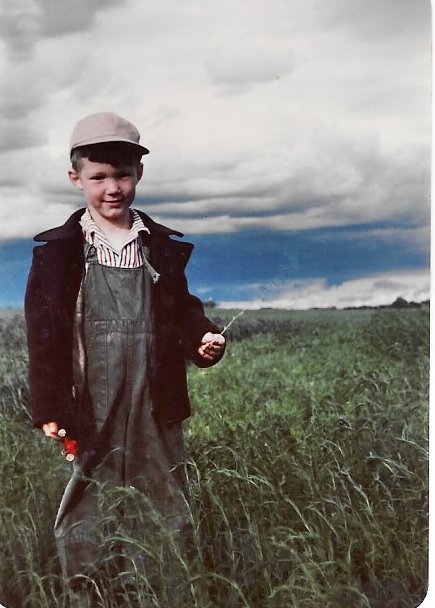 Sound is something it’s easy to take for granted. Like the air I breathe, I take it for granted unless something stands out in the sound cloud around me. Then, maybe a noise I hear in isolation, triggers a memory. At once, the present moment dissolves, and I’m inside a past moment; it’s a spark of time as fresh and real as the original. These reverberations of the past never erode or rust or lose their power. They’re visceral, eidetic, and so penetrating that important parts of my life, my very soul, was shaped by them. It may be that my individuality and yours are defined as much by echoes as by fingerprints.
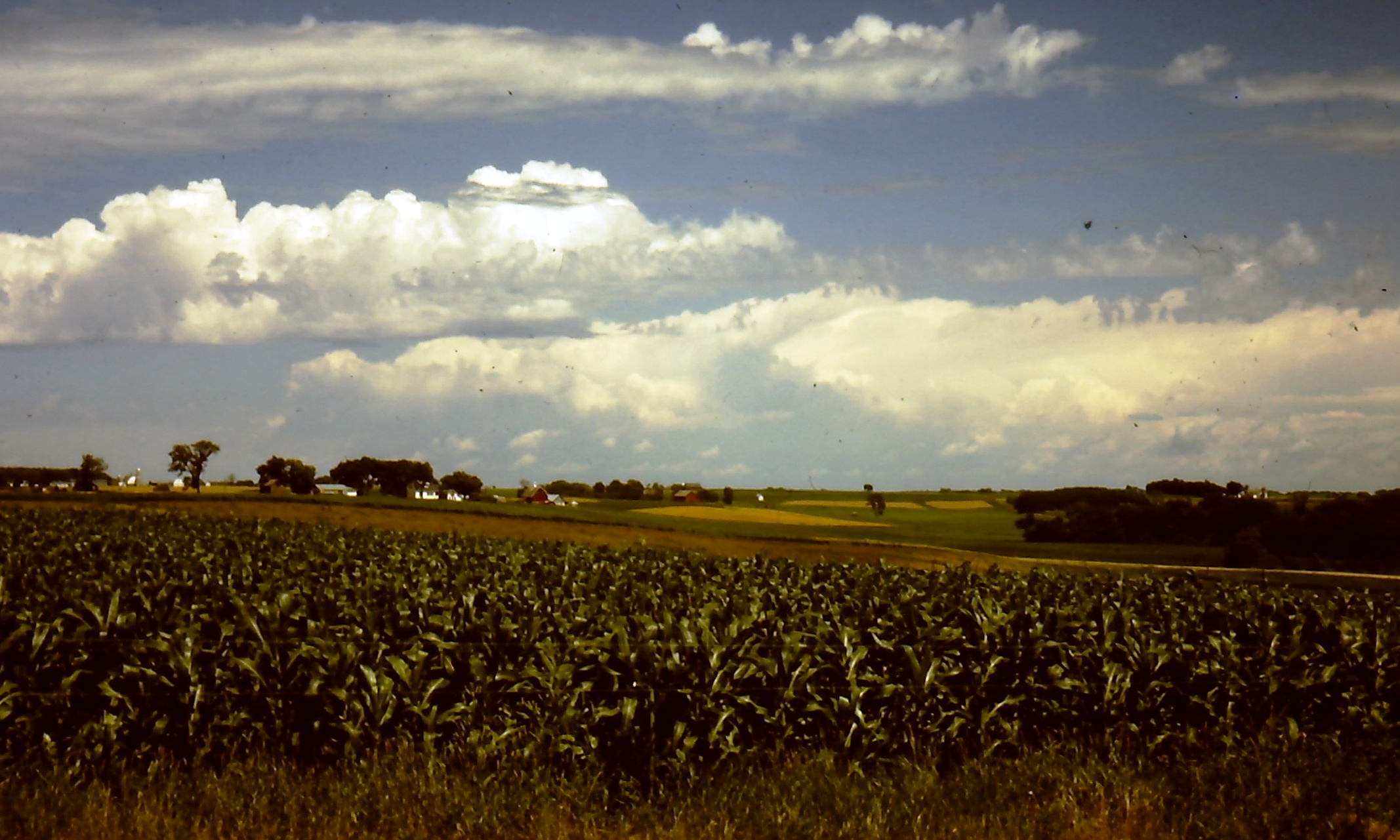 You may laugh, but I will swear it is possible to hear corn growing. I know I did on humid, July nights, when no breezes stirred southern Minnesota. Lying in bed, I heard the faintest of sounds outside, as if someone were tearing paper slowly and carefully to make no noise at all. But something was ripping in the lower fields. It was the sound made by leaves of corn splitting their sheaths as they unfurled in the muggy darkness. It was a ‘green noise’ that often lulled me to sleep when nothing else could.
 by a squeal. They usually fed at night, and took turns eating at the individual feed boxes covered with metal lids. In sixes and sevens, they nosed up the lids, then grunted contentedly as they smacked on ground oats and corn. When sated, each pulled his snout from the lid and it fell with a ‘clunk.’ Many nights, I fell asleep listening to grunt, smack-smack-smack, grunt. Clunk! This rhythm lasted until I left for college, and Dad sold the hogs. For a long time afterward, on visits home, I unconsciously listened for them and, when I didn’t hear them, knew a part of me was no longer resident there either.
 whispers ‘sweet nothings’ to leaves on a summer’s eve. Like great compositions, the wind may use a caesura, a full stop amid a storm, and in the fragment of silence, I can hear an individual drop of rain fall from a leaf and strike the ground with a fat ‘plop.’ The wind talks. For those who listen, there is much to be learned from the wind.
 went to Mass. As the rural population thinned, the diocese closed the church, and it fell victim to time and neglect. I last saw it on a summer evening, shuttered but humming with the sound of bees swarming about a hole in its eaves. Only the cemetery remains but, somewhere in the heavens, the reverberations of that bell continue to ripple toward eternity.
 purred. Yet, despite the make of tractor, their sound faded quickly with distance. Some of my deepest memories are of twilight on spring evenings, hearing my father whistling Broadway show tunes as he tilled a field for planting. As sure as the sun came up in the east, I knew his restless soul was utterly content and he wanted nothing more than to make the brown, prairie soil ready for seed.
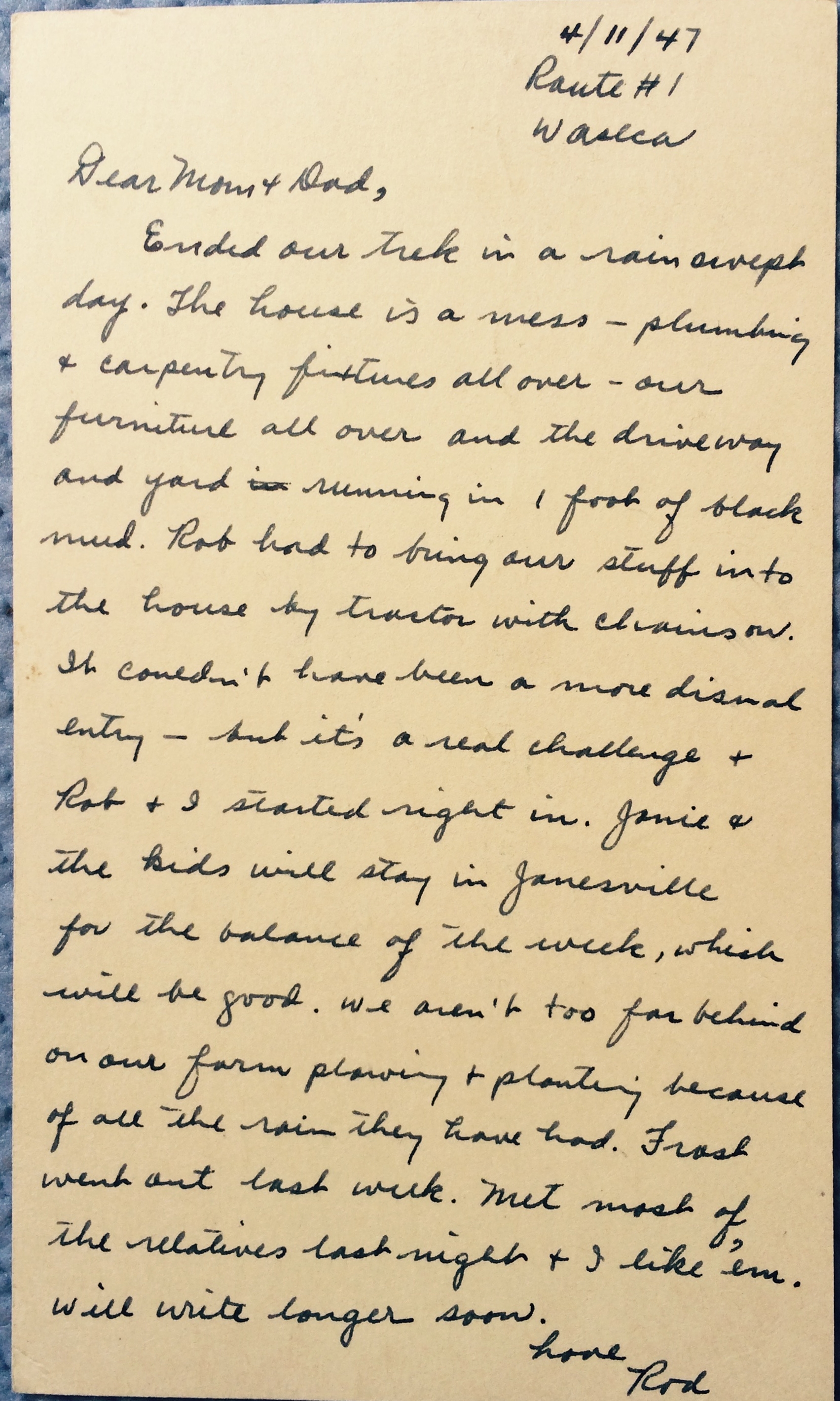




 R. Newell Searle